Quick Answer:
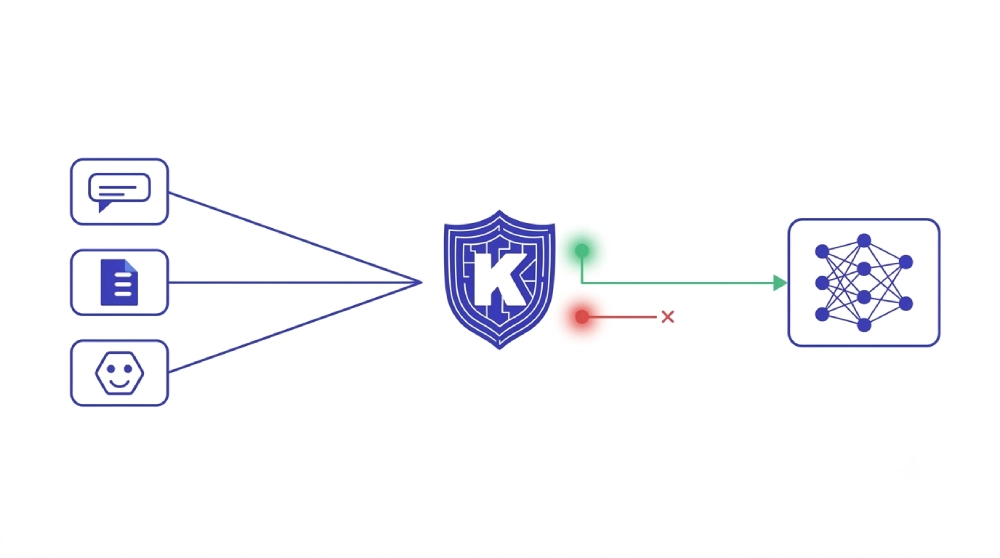
AI Security Posture Management (AISPM), also called AI Posture Management, is the continuous process of discovering, monitoring, and controlling how AI tools, models, and agents interact with your company's data and systems. It covers everything from spotting an unapproved AI app on someone's laptop to blocking a customer record from being pasted into a public chatbot. Most teams that manage AI posture well pair a discovery layer with policy enforcement at the point where employees actually use AI, which is the endpoint.
Most data loss prevention vendors now claim some form of GenAI security, but the claims vary wildly in what they actually cover. The only reliable way to evaluate them is to test four things directly: whether the vendor sees the data users paste and upload into AI tools at the moment it happens, whether classification understands document context rather than just keyword matches, whether policies are enforced in real time at the endpoint or only logged after the fact, and whether the platform accounts for autonomous AI agents acting on a user’s behalf, not just humans typing into a chatbot. A February 2023 Cyberhaven study found that 11% of the data employees paste into ChatGPT is confidential, and IBM’s Cost of a Data Breach Report 2025 found that one in five breached organizations (20%) were compromised through shadow AI. Any DLP vendor’s GenAI claims should be tested against those two realities before a contract is signed.
TL;DR
GenAI security claims from DLP vendors fall into two buckets: input-level visibility (the sensitive data users paste or upload into AI tools) and agentic visibility (what autonomous AI agents do on a device). Ask which one you are buying.
Context-aware data classification software beats regex-based pattern matching for GenAI use cases because inputs rarely contain neat, structured patterns like credit card numbers.
Endpoint DLP software sees shadow AI and agentic activity before it leaves the device; cloud DLP solutions that only inspect network or API traffic miss local copy-paste, screen capture, and unmanaged apps.
No single certification proves a "GenAI-secure" DLP product exists yet; buyers should instead ask for OWASP LLM Top 10 and MITRE ATLAS alignment, plus references from regulated customers.
Data loss prevention pricing for GenAI security should be evaluated per data source covered, not per seat, since GenAI risk scales with how many apps and agents touch sensitive data.
About the Author: This article is written by the Kitecyber team. Kitecyber is a data loss prevention platform built specifically to address AI copilots and autonomous agents reading and moving sensitive data at machine speed. The platform is designed for fintech, healthcare, and AI-native companies evaluating GenAI security controls under SOC 2, HIPAA, and FINRA requirements.
What Does "GenAI Security" Actually Mean in a DLP Product?
GenAI security in a DLP context means controlling how sensitive data moves into, through, and out of generative AI tools and the autonomous agents built on top of them. That is a broader scope than it sounds. It includes what a user pastes into ChatGPT, what a browser-based copilot extracts from an open document, what an autonomous agent uploads to a third-party API during a workflow, and what shadow AI tools employees adopt without IT’s knowledge. A vendor that says “we support GenAI security” without specifying which of these four vectors they cover is giving you a marketing phrase, not a capability. The first question in any evaluation should be blunt: which of these four does your product actually see and act on, and which does it just log?
Which Data Exfiltration Vectors Should the Vendor Be Able to Show You Live?
Data exfiltration prevention for GenAI tools has to account for the ways data actually leaves a device, not just the ways vendors find easiest to demonstrate. Building on the scope question above, the practical test is to ask for a live demo, not a slide, covering:
Clipboard paste into a browser-based AI chat (ChatGPT, Claude, Gemini, and similar)
File upload to a GenAI app through a browser or desktop client
Browser extension or copilot summarizing an open file and sending content externally
API calls made by an internal application or agent to an LLM provider
Unsanctioned or "shadow" GenAI apps an employee installed without approval
If a vendor can only show you the first two, they are covering the most visible and most heavily marketed vector, not the full surface. Agentic workflows in particular are underrepresented in most product demos because they are harder to instrument and rarely trigger the kind of visible pop-up that makes for a good sales screenshot.
How Do You Test Shadow AI Detection Claims Instead of Taking Them at Face Value?
Shadow AI detection means identifying GenAI tools in use across an organization that were never approved, provisioned, or reviewed by IT or security. This matters because the 20% breach figure tied to shadow AI cited above is not a niche edge case, it is a documented and growing share of GenAI-related incidents. To test a vendor’s claim, ask three specific questions:
Does detection happen at the endpoint (so it catches personal browser tabs, unmanaged extensions, and locally installed apps) or only at the network edge (so it misses anything encrypted or off-network)?
Does the vendor maintain and update a classification list of known GenAI apps and agent frameworks, or rely purely on generic URL categorization?
Can the tool distinguish between a sanctioned instance of a tool (a company's licensed OpenAI enterprise account) and an unsanctioned personal instance of the same tool?
That third point trips up a lot of vendors. A DLP platform that flags “ChatGPT usage” as a single category without distinguishing sanctioned from unsanctioned instances will either generate excessive false positives or miss the actual risk entirely.
What Should Context-Aware Classification Look Like for GenAI Inputs Specifically?
Context-aware classification means the system evaluates the surrounding document, conversation, or workflow to determine sensitivity, rather than matching isolated patterns like a social security number format. This distinction matters more for GenAI inputs than for traditional DLP use cases. When someone pastes or attaches “the Q3 churn analysis for our top five enterprise accounts,” the sensitive part is a spreadsheet full of confidential customer data — content that contains no regex-matchable pattern at all. Data classification software built for the pre-GenAI era was optimized to catch structured identifiers: card numbers, SSNs, account numbers. Ask vendors to demonstrate classification on the unstructured content users actually paste and upload — source code snippets, free-text customer records, exported tables — not just canonical PII examples. If their demo data set is entirely made of formatted numbers, the product likely was not built with GenAI input traffic in mind.
How Should Agentic AI Security Risk Change Your Evaluation Criteria?
Agentic AI security risk refers to the exposure created when autonomous AI agents, not human users, take actions like reading files, calling APIs, or moving data between systems. This is a distinct category from input-level GenAI security, and it is where the newest and least mature vendor claims live. Security organizations have started to formalize the risk categories here: the OWASP Top 10 for LLM Applications 2025 highlights excessive agency as a named risk, and MITRE ATLAS catalogs adversarial techniques against AI systems, including agent tool misuse and credential-theft scenarios. When evaluating a vendor, ask directly whether their product distinguishes between a human-initiated action and an agent-initiated action, since the two require different enforcement logic. A human pasting a customer list into a chatbot can be warned and coached in real time. An autonomous agent executing a multi-step workflow at machine speed needs policy enforcement that does not depend on a human noticing an alert.
What Compliance and Governance Evidence Should You Actually Ask For?
Compliance evidence for GenAI security claims should map to recognized frameworks, not proprietary vendor scorecards. As of 2026, no technical standard exists solely for evaluating DLP GenAI claims; instead, the closest reference points are AI-specific management frameworks and existing analyst evaluations. Ask vendors for:
Evidence Type
What It Tells You
Alignment with ISO/IEC 42001
Whether the vendor’s own AI governance follows a certifiable AI management standard
NIST AI RMF / GenAI Profile mapping
Whether the product’s risk categories match a recognized federal framework
OWASP LLM Top 10 / MITRE ATLAS references
Whether agentic and prompt-injection risks were part of the design process
SOC 2, HIPAA, PCI DSS, or FINRA control mapping
Whether GenAI monitoring feeds into existing compliance reporting, not a separate silo
Named regulated customer references
Whether the claims hold up under real audit scrutiny in fintech or healthcare
As of 2026, several established players describe specific GenAI controls: Microsoft Purview blocks Copilot from grounding on labeled sensitive data, Netskope uses AI guardrails to inspect GenAI prompts and responses, and Forcepoint offers Risk-Adaptive Protection extending into multi-cloud and GenAI coverage. Those are useful reference points for what “specific” looks like versus a vague claim of “AI-aware DLP.” When you evaluate any vendor, including Kitecyber, hold their language to that same bar of specificity.
Should GenAI Security Live at the Endpoint, the Network, or the Cloud API Layer?
Where enforcement happens determines what a DLP product can actually stop, and this is the architectural question underneath every claim discussed above. Network-based tools only inspect traffic they can see, which excludes encrypted local activity and anything happening entirely on-device. Cloud DLP solutions built as API integrations cover the specific SaaS apps they connect to, but not the browser tab, clipboard, or local file a user interacts with before or after that app. Endpoint DLP software sits at the point where the user, the file, and the AI tool all intersect, before data ever leaves the device. This is the practical reasoning behind an operating model of seeing activity, deciding on a policy, and enforcing it continuously and in real time, rather than reconstructing what happened from logs after the fact. Zero trust data protection principles reinforce the same logic: verify the action and the context at the moment it happens, rather than granting broad trust to a managed device or network segment. Because the enforcement point also touches SaaS access, web traffic, and device posture, the same lightweight agent can support zero trust network access and secure web gateway functions as extensions of DLP coverage, which in turn helps address a wider set of SOC 2 and ISO 27001 controls without deploying separate tools.
How Should You Structure Data Loss Prevention Pricing Conversations Around GenAI?
Pricing conversations should be structured around coverage breadth, not seat count, since GenAI risk is driven by how many data sources, apps, and agents an organization runs, not simply how many employees it has. Ask vendors to itemize:
Cost per endpoint versus cost per monitored data source (email, browser, SaaS, removable media)
Whether shadow AI detection and agent monitoring are included or sold as an add-on
Whether GenAI-specific classification updates are part of the base license or a separate maintenance fee
Whether AI-assisted alert triage (reducing false positives and generating incident summaries) is included
A vendor that bundles GenAI security as a checkbox add-on to a legacy per-seat model is signaling that GenAI monitoring was retrofitted rather than built in from the start.
About Kitecyber
Kitecyber is an endpoint-native data loss prevention platform built to protect organizations against AI copilots and autonomous agents reading and exfiltrating sensitive data at machine speed.
See verified customer reviews of Kitecyber on G2 and SourceForge.
No. Some cover only input monitoring for known chat apps, others extend to shadow AI detection, and a smaller number address autonomous agent behavior. Always ask which of the four exfiltration vectors described above are covered.
It remains useful for structured data like account numbers, but it misses most unstructured content users paste and upload, which is why context-aware classification matters specifically for GenAI use cases.
They can detect known GenAI domains in network traffic, but they typically miss local browser extensions, personal device instances, and encrypted or off-network activity that endpoint-based detection captures.
Input-level security governs the sensitive data a human pastes or uploads into a GenAI tool. Agentic security governs what an autonomous agent does on its own, including tool calls and multi-step workflows, which OWASP and MITRE ATLAS both treat as a distinct risk category.
Not yet as a dedicated standard. The closest available reference points are ISO/IEC 42001, the NIST AI RMF GenAI Profile, and analyst evaluations like the Forrester Wave for Data Security Platforms and Gartner Magic Quadrant reports.
They should map every GenAI control back to an existing compliance requirement, FINRA and PCI DSS for financial services, HIPAA for healthcare, rather than treating GenAI security as a separate initiative from existing DLP compliance work.
Data sources and coverage breadth are a more accurate proxy for risk than headcount, since a small team using many AI tools and agents can carry more exposure than a larger team using few.
With over a decade of experience steering cybersecurity initiatives, my core competencies lie in network architecture and security, essential in today's digital landscape. At Kitecyber, our mission resonates with my quest to tackle first-order cybersecurity challenges. My commitment to innovation and excellence, coupled with a strategic mindset, empowers our team to safeguard our industry's future against emerging threats.
Since co-founding Kitecyber, my focus has been on assembling a team of adept security researchers to address critical vulnerabilities and enhance our network and user security measures. Utilizing my expertise in the Internet Protocol Suite (TCP/IP) and Cybersecurity, we've championed the development of robust solutions to strengthen cyber defenses and operations.
With over a decade of experience steering cybersecurity initiatives, my core competencies lie in network architecture and security, essential in today's digital landscape. At Kitecyber, our mission resonates with my quest to tackle first-order cybersecurity challenges. My commitment to innovation and excellence, coupled with a strategic mindset, empowers our team to safeguard our industry's future against emerging threats.
Since co-founding Kitecyber, my focus has been on assembling a team of adept security researchers to address critical vulnerabilities and enhance our network and user security measures. Utilizing my expertise in the Internet Protocol Suite (TCP/IP) and Cybersecurity, we've championed the development of robust solutions to strengthen cyber defenses and operations.
Posts: 94
Download Case Study
Please fill out the form below to download the case study!