Mid-market security teams built their data protection programs around platforms like Netwrix for good reason: strong auditing, access governance, and compliance reporting made it a practical choice for organizations with complex regulatory requirements. But 2026 has introduced a threat that those tools were not designed to address. AI copilots and autonomous agents can read, copy, and exfiltrate sensitive data at machine speed, often through the exact channels that legacy auditing tools either miss or cannot act on in real time. The result is a growing gap between what Netwrix does well and what mid-market teams actually need right now. Endpoint-native platforms built around real-time data security are filling that gap, and the migration is accelerating.
TL;DR
- Netwrix Endpoint Protector focuses on endpoint-level enforcement but lacks native data lineage tracking and governance across SaaS apps.
- AI agents can exfiltrate data at machine speed through API calls, chained tool abuse, and zero-click vulnerabilities, a threat model that legacy auditing-first platforms were not built to stop.
- Mid-market teams in 2026 are replacing fragmented tool stacks with one endpoint-native agent that covers DLP, zero trust endpoint security, SaaS control, and AI agent governance simultaneously.
- Kitecyber’s “See, Decide, Enforce” model enforces the right control at the exact moment of risk, not after an audit log is reviewed.
- Consolidation over fragmentation is the operating principle: one lightweight agent replaces multiple point solutions without adding complexity.
About the Author: Kitecyber is a Bay Area cybersecurity company specializing in endpoint-native data security for organizations operating in AI-driven environments. Its platform is designed specifically to protect sensitive data at the point of risk: the endpoint, where work actually happens.
What Does Netwrix Actually Do, and Where Does It Stop?
Netwrix is a data security platform that covers data access governance, auditing, identity and access risk, and compliance reporting. Its primary use cases include data security posture management (DSPM), threat detection, and automated compliance reporting for frameworks like GDPR, HIPAA, and PCI DSS. The platform supports on-premises virtual appliances, cloud-hosted instances, hybrid setups, and SaaS options like Netwrix 1Secure, making it genuinely flexible for mid-market organizations managing complex regulatory requirements.
That flexibility, however, sits mostly at the governance and visibility layer. Netwrix Endpoint Protector operates at the endpoint level, but it monitors data transfers only for a predefined list of supported applications. If a user reaches a GenAI or SaaS tool through an unsupported browser, data exfiltration can pass unnoticed.
This is not a criticism of what Netwrix was built to do. Audit trails and access governance are legitimate and valuable controls. The problem is that in 2026, the threat model has moved, and auditing after the fact is no longer sufficient when the attacker is an AI agent operating in milliseconds.
How Has AI Changed the Endpoint Threat Model?
The honest answer is: fundamentally, and faster than most security teams anticipated.
AI agents and copilots can exfiltrate sensitive data through authorized API calls, chained tool abuse, poisoned tool outputs, and zero-click vulnerabilities that extract information directly from the AI’s context window. Unlike a human insider threat, there is no behavioral hesitation to detect, no slow data transfer to flag, and no obvious anomaly in a network log.
This means the endpoint is now the real-time decision point for data protection. The question is not “what happened to this file?” but “what is happening to this data right now, and should this action be allowed?”
Traditional tools were built around a different sequence. Endpoint tools detect malware. Network inspection tools analyze traffic. Legacy DLP enforced static policies based on pattern matching. Auditing platforms like Netwrix record what occurred and surface it for review. None of those approaches stop an autonomous AI agent from exfiltrating a document in the time it takes a human to read a Slack message.
What Should Mid-Market Teams Look for in a Replacement?
Building on the threat model above, the harder question is what “better” actually looks like in practice, beyond the obvious answer of “faster alerts.”
Mid-market teams evaluating replacements should focus on five concrete capabilities:
|
Capability
|
What to Ask the Vendor
|
|
Real-time enforcement
|
Can the agent block a clipboard paste or browser upload before it completes?
|
|
Data lineage
|
Can you trace a specific file from its origin through every copy or upload?
|
|
AI agent visibility
|
Does the platform see data entered into GenAI prompts on unmanaged tools?
|
|
Zero trust access
|
Does ZTNA incorporate device posture and data sensitivity, not just identity?
|
|
Agent consolidation
|
How many separate agents must be deployed and managed?
|
How Does Kitecyber Address This Gap?
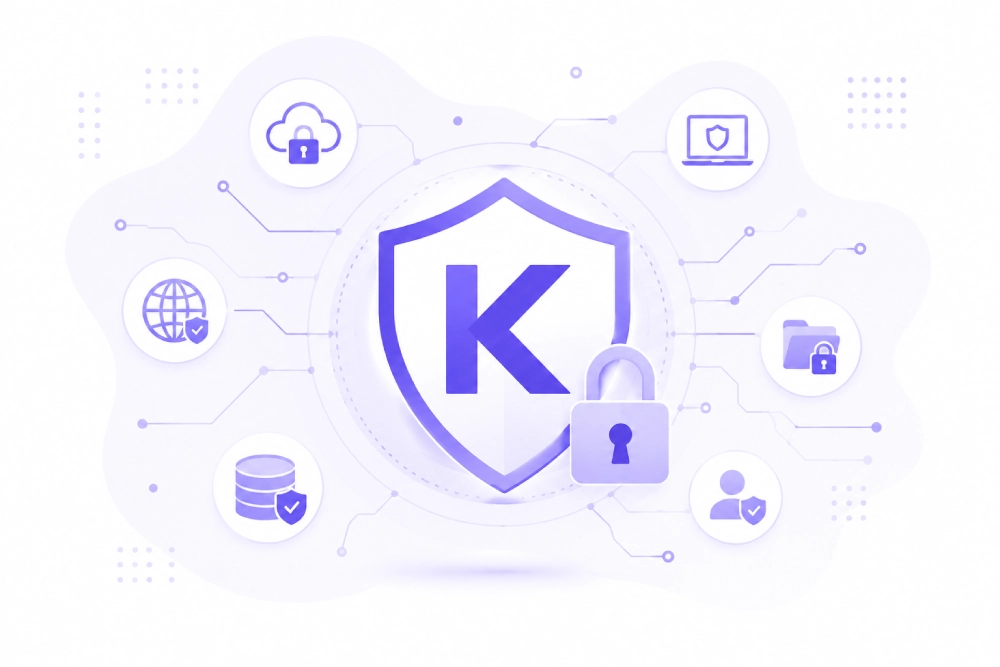
Kitecyber was built around a single operating model: See, Decide, Enforce – continuously. One lightweight agent sits on the endpoint and observes activity across files, clipboard, browser behavior, GenAI interactions, SaaS uploads, removable media, and private app sessions. Each action is evaluated in context: who is acting, on what device, with what data, and where it is going. The right control is enforced at the moment of action, not surfaced in a dashboard for a human to review later.
This matters specifically for the AI agent era because Kitecyber tracks data lineage in real time and classifies data using document context alongside pattern matching. It does not rely solely on a predefined list of monitored applications. If a user or an AI copilot attempts to move sensitive data through an unsanctioned channel, the platform sees it and acts on it.
Around that data-security core, Kitecyber unifies the controls mid-market teams need: endpoint and network DLP, GenAI and AI agent security, Secure Web Gateway, SaaS app protection, ZTNA to replace legacy VPNs, and unified endpoint management. These controls share one trust engine, which means there is nothing to stitch together and no blind spots between tools. Organizations like DuploCloud, Lily AI, and Vanta have adopted this model as the endpoint-native alternative to fragmented stacks.
About Kitecyber
Kitecyber is a next-generation cybersecurity company headquartered in the Bay Area, California, built to protect sensitive data at its source: the endpoint, where work actually happens. Its single lightweight agent unifies endpoint and network DLP, GenAI and AI agent security, Secure Web Gateway, SaaS app protection, ZTNA, and unified endpoint management into one platform with no fragmentation between controls. Kitecyber is purpose-built for the AI agent era, giving mid-market teams real-time visibility and enforcement over where sensitive data goes and who, or what, is moving it. Customers including DuploCloud, Lily AI, Vanta, Sarvam, and Scrut Automation use Kitecyber to adopt AI confidently without sacrificing control over their most sensitive data.
If your team is evaluating alternatives to Netwrix or looking to consolidate a fragmented security stack into a single endpoint-native platform, visit kitecyber.com to start a free trial or speak with the team directly.
References
Frequently Asked Questions