How secure is your sensitive source code right now? Are your remote employees downloading internal customer records onto personal USB drives this very hour?
Security leaders lose thousands of proprietary data files every month because legacy data protection software fails to monitor modern cloud channels. Relying on basic file tracking software could expose your entire enterprise to catastrophic data breaches.
Data protection metrics reveal that insider data exfiltration incidents rose by 32% over the past two years. Most organizations discover data leaks months after an engineer leaves the company. When you deploy Code42 DLP (now primarily known as Code42 Incydr), you notice that legacy insider risk management architectures leave massive blind spots across production environments.
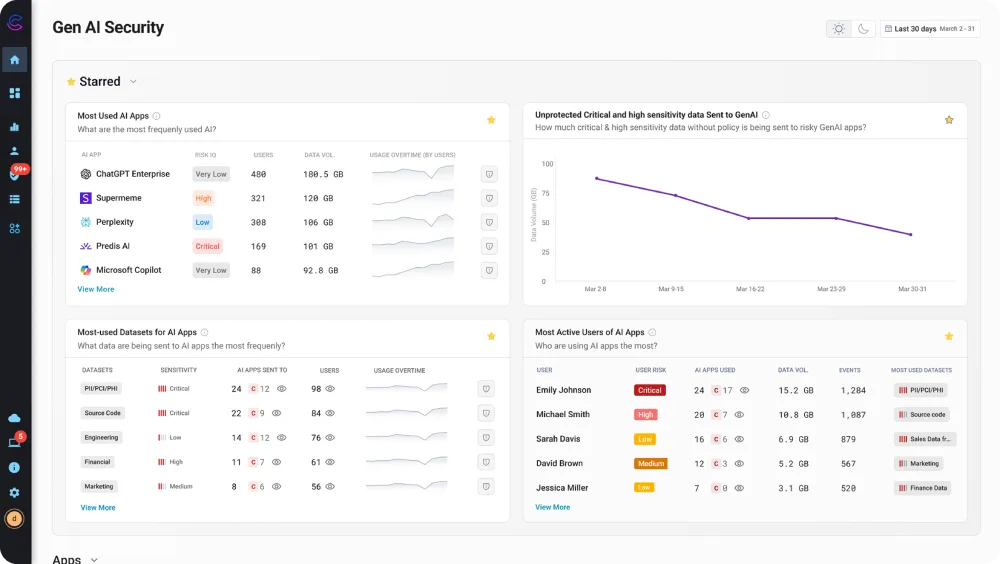
Code42 endpoint dlp monitors broad file paths well, but its heavy endpoint agent drags down operating system performance. Security teams on Reddit note that configuring its policy rules feels like typing code directly into a spreadsheet. You need a platform that stops data leaks instantly across web applications, generative AI interfaces, and corporate endpoints.
This guide reveals the major limitations of Code42 Data Loss Prevention and examines eight elite Code42 Alternatives built for modern engineering and compliance operations.
Code42 DLP at a glance
Code42 DLP, now positioned under the Incydr name in many places, focuses on insider risk detection, file exfiltration visibility, and response workflows rather than classic block first DLP rules. That matters because many teams want to see risky behavior before they try to stop it. The result is a product that often fits security teams who care about investigation and behavior tracking more than rigid policy enforcement.
In simple terms, Code42 Data Loss Prevention helps you discover where sensitive data is moving, who is moving it, and which actions look risky. Its cloud based plans and product bundles include monitored sources, metadata collection, integrations, and support, with custom pricing that starts around a 500 user licensing package in one published pricing summary. For buyers comparing tools, that pricing model can be helpful if you want a tailored package, but it can also make quick budget planning harder.
What real users like
One common reason people like Code42 DLP is its open ended detection model. In a PeerSpot discussion, users described it as a tool that finds data as it goes out rather than forcing everything through a heavy policy build process first. That makes it attractive for teams that want faster visibility into risky file movement and less upfront policy tuning.university.code42+1
Review pages also point to strong usability and straightforward deployment. Code42 University says the setup is simple and can start quickly without developing policies in advance, and that message lines up with review comments praising ease of use and scalability. For many teams, that lower setup friction is a serious advantage when security staff are already stretched thin.
Common complaints
The biggest complaint theme is that Code42 DLP can feel broad rather than deeply preventive. Some users like the discovery style, but others want stricter policy based blocking, tighter controls, or a more conventional DLP workflow. That gap matters if your main goal is hard prevention instead of visibility and response.peerspot+1
Pricing is another friction point. Public sources describe custom quotes rather than a simple self-serve plan, and one source says licensing starts at around 500 users. For smaller teams, that can feel like a heavier buying motion than they want, especially when they are still comparing tools. A few buyers may also dislike the fact that the product has evolved around the Incydr identity, which can add confusion when researching older Code42 DLP content.
Features that matter
Here are the features buyers usually care about most when they evaluate Code42
endpoint DLP:
These features make Code42 useful for teams that want clear visibility into data movement without building a giant rule set first. If your security program is focused on insider risk, shadow SaaS activity, and post event investigation, that model can fit well. If you need stricter
device control and more aggressive prevention, you may want alternatives with broader enforcement options.
Top 8 Code42 Alternatives in 2026
If you want to move away from heavy endpoint agents and delayed alerts, several modern platforms offer faster data protection.
Here is the definitive list of Code42 alternatives ranked by deployment speed and security features.
1. Kitecyber
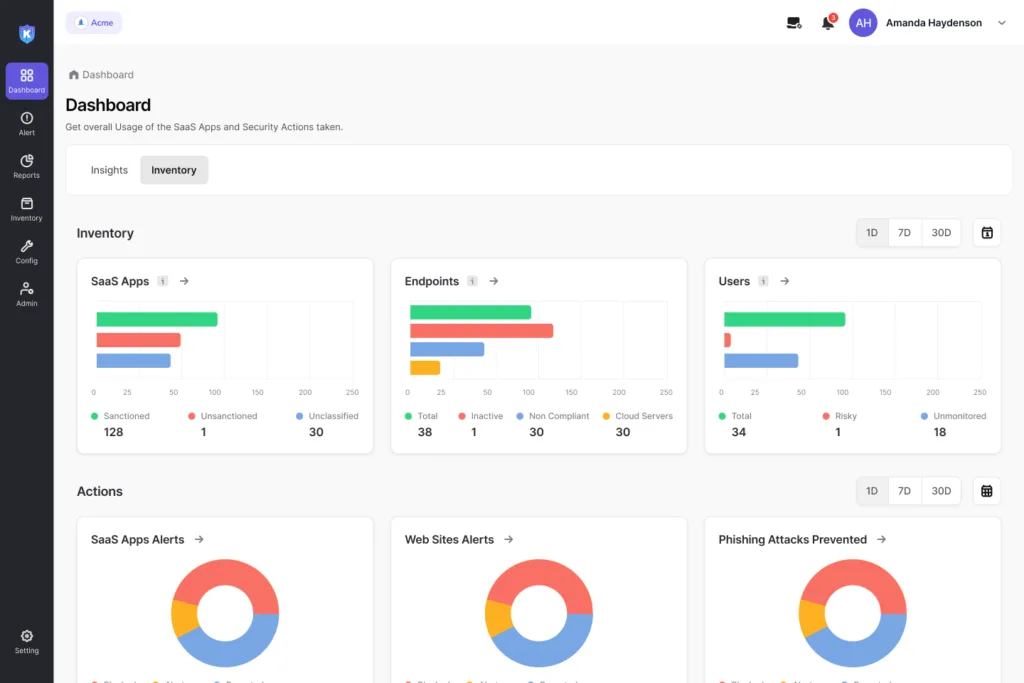
Kitecyber is the strongest alternative for teams that want a more modern approach to endpoint and cloud data protection. It is a better fit when you want deeper device aware control, stronger prevention workflows, and broader compliance alignment across endpoints and mobile environments. For many security teams, that combination is more useful than a pure discovery led model.
Kitecyber is especially compelling if your buying criteria include unified visibility, lower noise, and tighter action on risky behavior. Code42 DLP is good at exposure discovery, but Kitecyber can be stronger when you want one platform to support prevention, compliance, and device control at the same time. That is the key reason it belongs at the top of a Code42 alternatives list.
Overview
Kitecyber removes the engineering friction associated with traditional enterprise software deployments. The platform provides immediate data visibility, automated content classification, and active data protection across all business departments. It operates without slowing down corporate hardware or flooding dashboards with false alarms.
Essential Features
Product Pricing
Kitecyber uses a simple, transparent per-user subscription model with no hidden charges for management servers or support services.
Best For
Fast-growing technology firms, fintech platforms, regulated healthcare organizations, and modern security operations groups that require real-time enforcement over monitoring alerts.
2. Cyberhaven
Cyberhaven uses
data lineage tracking to follow sensitive company files as they change formats, names, or locations.
Overview
This platform treats data loss prevention as a continuous tracing process. It monitors data handling across web browsers, messaging programs, and email software. The tool builds a visual map showing how content moves from internal databases out to end-user workstations.
Essential Features
Product Pricing
The vendor provides quote-based pricing depending on your total device count and specific cloud integrations.
Best For
Large corporate security teams that prioritize long-term data tracking and visual file path analysis over simple policy rules.
3. Netwrix Endpoint Protector
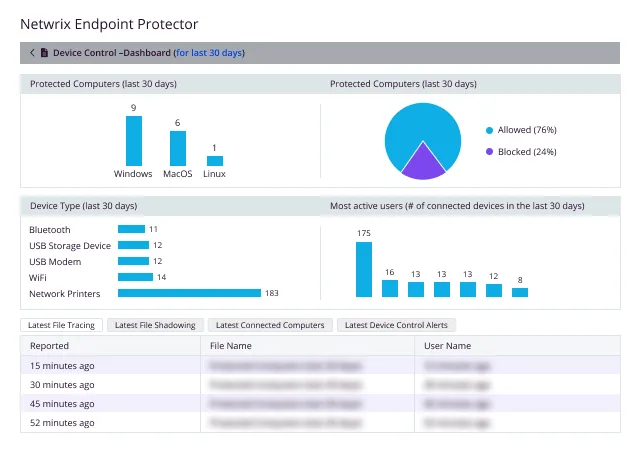
Netwrix Endpoint Protector provides comprehensive control over physical hardware connections and local peripheral ports.
Overview
This solution excels at locking down physical storage vulnerabilities on corporate laptops. It prevents users from copying intellectual property onto removable drives while enforcing local software access limits. The configuration dashboard helps compliance teams meet rigid regulatory requirements without custom scripting.
Essential Features
Product Pricing
Pricing requires a direct corporate consultation, with tiers scaled to your total active endpoint nodes.
Best For
Industrial enterprises, medical systems, and banking firms that need to lock down local hardware ports across distributed office buildings.
4. Teramind
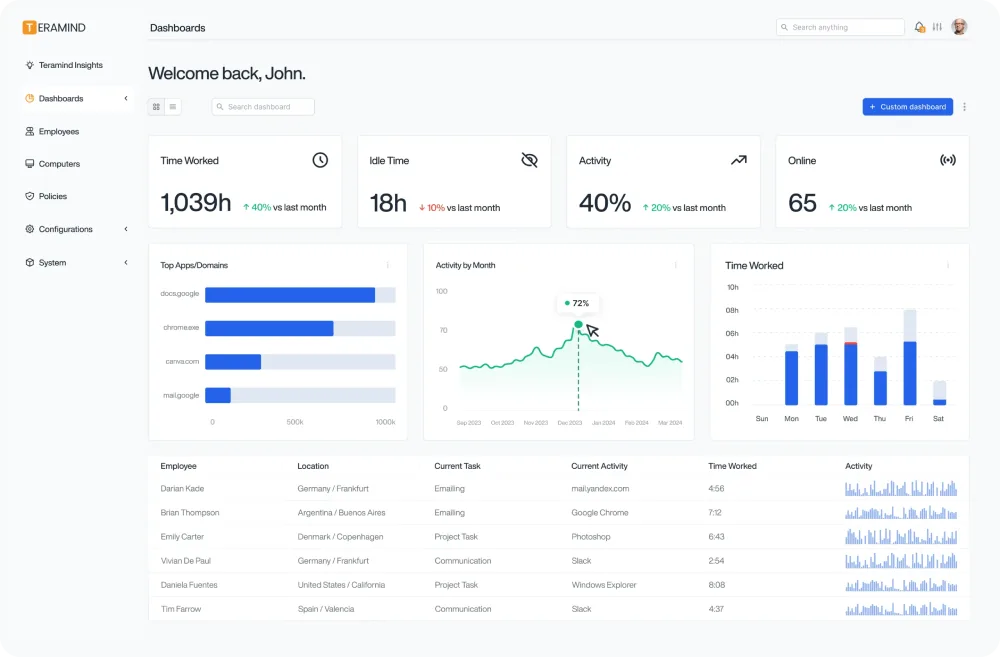
Teramind is often chosen for behavior monitoring and insider risk detection. It can be useful when you need visibility into user actions on endpoints and want to detect suspicious behavior patterns. It is frequently discussed by teams looking for monitoring plus prevention.
Overview
The platform records user screens and monitors keystrokes to detect anomalous behavior patterns. It analyzes computer interactions to calculate real-time employee risk scores. This software helps managers identify malicious intent before an employee attempts to extract files.
Essential Features
Product Pricing
Subscription packages start at $11.25 per seat per month for the base monitoring tier.
Best For
Operational management groups and compliance officers who require deep behavioral tracking and complete user activity records.
5. Proofpoint Insider Threat Management
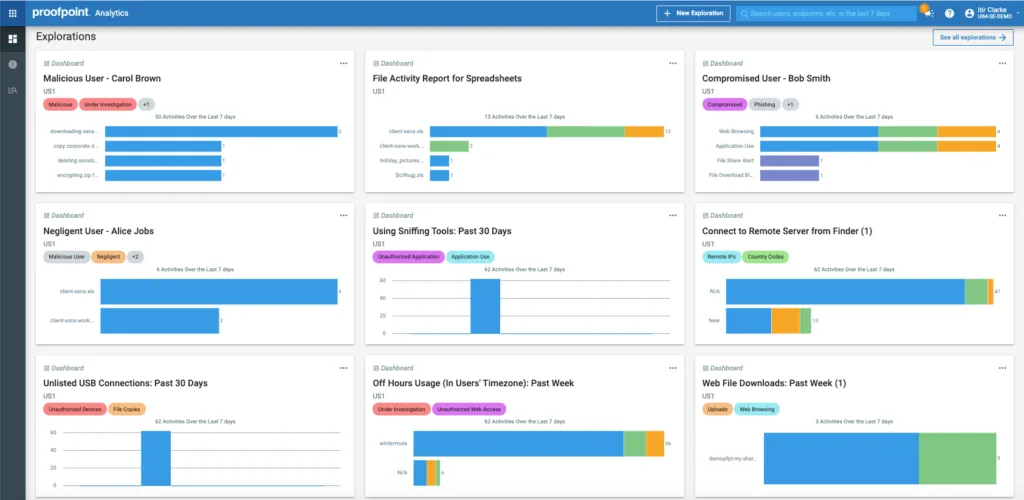
Proofpoint focuses on isolating high-risk user accounts and monitoring cloud communication channels.
Overview
This enterprise platform integrates endpoint tracking with deep email security tools. It evaluates employee risk profiles based on external threat targeting and internal file access patterns. The product uses lightweight agent collection to track data moves across your primary application ecosystem.
Essential Features
Product Pricing
Enterprise packaging requires a custom price quote based on your overall corporate user base.
Best For
Global organizations already heavily invested in the Proofpoint email protection and security ecosystem.
6. ManageEngine Endpoint DLP Plus
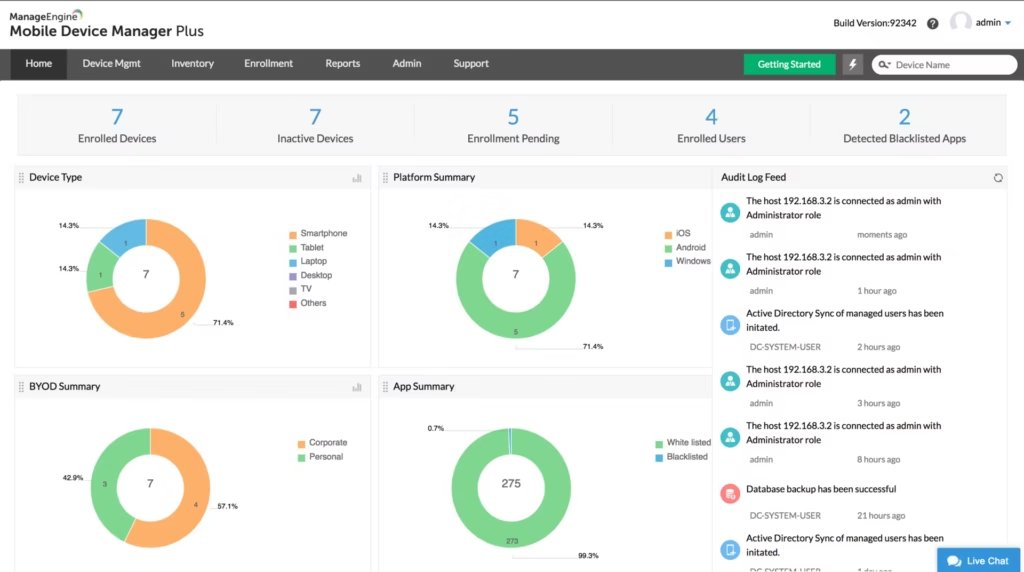
ManageEngine offers a budget-conscious data loss prevention tool designed for traditional enterprise environments.
Overview
This software helps IT departments enforce strict rules over network data paths and software usage. It excels at tracking classic data channels like network storage shares, enterprise email attachments, and local printer queues. The application fits smoothly into existing ManageEngine server deployments.
Essential Features
Product Pricing
The company offers tiered annual licensing plans alongside traditional perpetual corporate server options.
Best For
Mid-market IT groups that already use ManageEngine applications and want a standard compliance tick-box solution.
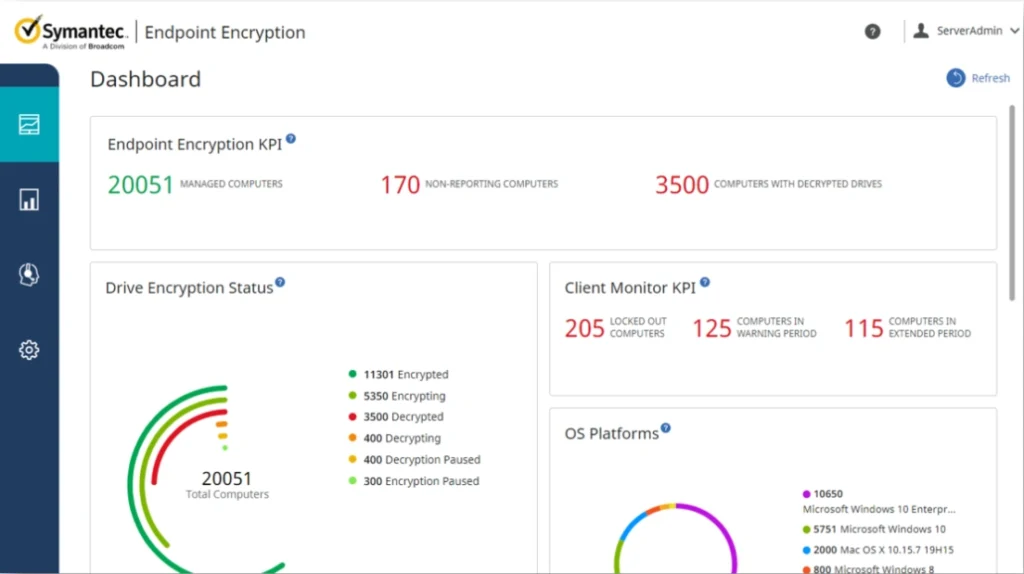
7. Symantec DLP by Broadcom
Symantec DLP provides a massive, highly scalable data protection suite for legacy enterprise networks.
Overview
This product remains a standard choice for Fortune 500 firms with extensive on-premises networks. It enforces consistent security rules across physical data centers, cloud infrastructure, and endpoint devices. The platform requires significant server hardware and a dedicated administration team to manage.
Essential Features
Product Pricing
Enterprise licensing contracts are managed via Broadcom enterprise software distributors.
Best For
Traditional bank networks, defense contractors, and massive corporations requiring deep on-premises policy enforcement.
8. Forcepoint DLP
Forcepoint delivers data protection that adapts policies dynamically based on real-time user risk scores.
Overview
This security platform alters its enforcement rules automatically based on how employees interact with company data. If an engineer triggers several minor alerts, the platform tightens its upload restrictions for that user account. This approach helps reduce broad policy friction across your engineering staff.
Essential Features
Product Pricing
Custom enterprise pricing is calculated based on your total seat count and chosen deployment modules.
Best For
Highly regulated enterprises that want to replace static security policies with automated user risk analysis.
Detailed Feature Matrix: Code42 Competitors
|
Solution
|
Real-Time Blocking
|
Deployment Speed
|
Gen AI Data Protection
|
Architecture Type
|
|
Code42 DLP
|
No (Alert Focus)
|
Slow
|
Limited
|
Endpoint Agent
|
|
Kitecyber
|
Yes (Immediate)
|
Under 15 Minutes
|
Full Protection
|
Cloud-Native AI
|
|
Cyberhaven
|
Yes
|
Weeks
|
Moderate
|
Heavy Endpoint Agent
|
|
Netwrix Protector
|
Yes
|
Days
|
Low
|
Multi-OS Agent
|
|
Teramind
|
Yes
|
Days
|
Low
|
Endpoint Agent / Network
|
|
Proofpoint ITM
|
No (Alert Focus)
|
Weeks
|
Moderate
|
Cloud + Agent
|
|
ManageEngine Plus
|
Yes
|
Days
|
Low
|
On-Prem / Cloud Hybrid
|
|
Symantec DLP
|
Yes
|
Months
|
Low
|
On-Premises Heavy
|
|
Forcepoint DLP
|
Yes
|
Weeks
|
Moderate
|
Cloud + Gateway
|
The Ultimate Decision Framework
The ideal data protection framework matches your actual engineering setup and compliance targets.
- Select Symantec or Forcepoint if you maintain large on-premises database networks and have a dedicated team to manage complex policy scripts.
- Select Teramind if you need comprehensive workplace tracking, including continuous desktop screen recording and active keystroke logs.
- Select Kitecyber if you want to eliminate endpoint lag, block data leaks to generative AI tools instantly, and secure your company’s data assets within fifteen minutes.
Frequently Asked Questions