Your team runs GTB Technologies DLP. A contractor pastes a client contract into ChatGPT to “clean up the formatting.” Nothing alerts. Nothing blocks it. The data leaves your perimeter, and your dashboard still shows green.
That gap is why so many security leads start searching for a GTB Technologies DLP alternative this year. Legacy DLP tools were built for a world of email attachments and USB drives. They were not built for a workforce that pastes proprietary code into an AI chat window before lunch.
The numbers back this up. Shadow AI use now factors into roughly 20% of data breaches, and those incidents cost about $670,000 more than the average breach, according to IBM’s 2025 Cost of a Data Breach report. Only 17% of organizations have technical controls in place to stop employees from uploading confidential data to public AI tools. The other 83% rely on policy documents and hope.
If GTB Technologies DLP is not catching this new class of leak, you are not the only one looking elsewhere. This guide breaks down the top GTB DLP alternatives and competitors, where GTB still holds up, and which platform fits your team based on size, industry, and risk profile.
Why Are Teams Searching for a GTB DLP Alternative?
GTB Technologies has built a name for itself with strong data fingerprinting and accurate detection. Reviewers on G2 consistently praise its ability to keep false positives low, and one buyer noted the tool’s capability to minimize false positives while a proof-of-concept pilot stood out compared to other tools they evaluated.
So why look elsewhere? Three reasons come up again and again in reviews and forum threads.
1. Deployment Complexity in Multi-Proxy Environments
One G2 reviewer comparing GTB to McAfee DLP Endpoint noted the platform was hard to implement in complex environments where data flowed through multiple proxy servers. If your infrastructure has grown organically over the years, this friction shows up fast during rollout.
2. Uneven Mac and Linux Feature Parity
PeerSpot reviewers note that GTB’s roadmap for Linux and Mac trails its Windows agent. One director at an IT firm mentioned the vendor is still building out
patch management and expanded platform coverage for non-Windows systems. If your workforce is Mac-heavy or you run a mixed Linux fleet, this gap matters.
3. No Native Coverage for GenAI and SaaS Sprawl
This is the big one. GTB Technologies DLP was designed to catch structured and unstructured data leaving through networks, endpoints, and files. It was not designed around a world where the average organization now runs over 1,550 distinct GenAI SaaS applications, up from just 317 in early 2025, according to Netskope’s 2026 Cloud and Threat Report. Employees upload gigabytes of data to AI apps every month, and most of it happens with zero visibility from IT.
What Is GTB Technologies DLP?
GTB Technologies DLP is a data loss prevention platform built around proprietary data fingerprinting. It classifies structured and unstructured data at the binary level, then enforces policies across networks, endpoints, and cloud services. GTB markets itself as the only DLP solution that keeps protecting data even when a device is offline, which appeals heavily to finance, healthcare, and government buyers.
TL;DR: GTB Technologies DLP
Best for: Mid-size and enterprise teams in finance, healthcare, or government who need strong offline data protection and can dedicate staff to fine-tune policies over time.
7 Best GTB Technologies DLP Alternatives Compared
We pulled this list from G2, Gartner Peer Insights, PeerSpot, and SourceForge data on which vendors buyers actually shortlist against GTB Technologies DLP. Here is how each one stacks up.
1. Kitecyber
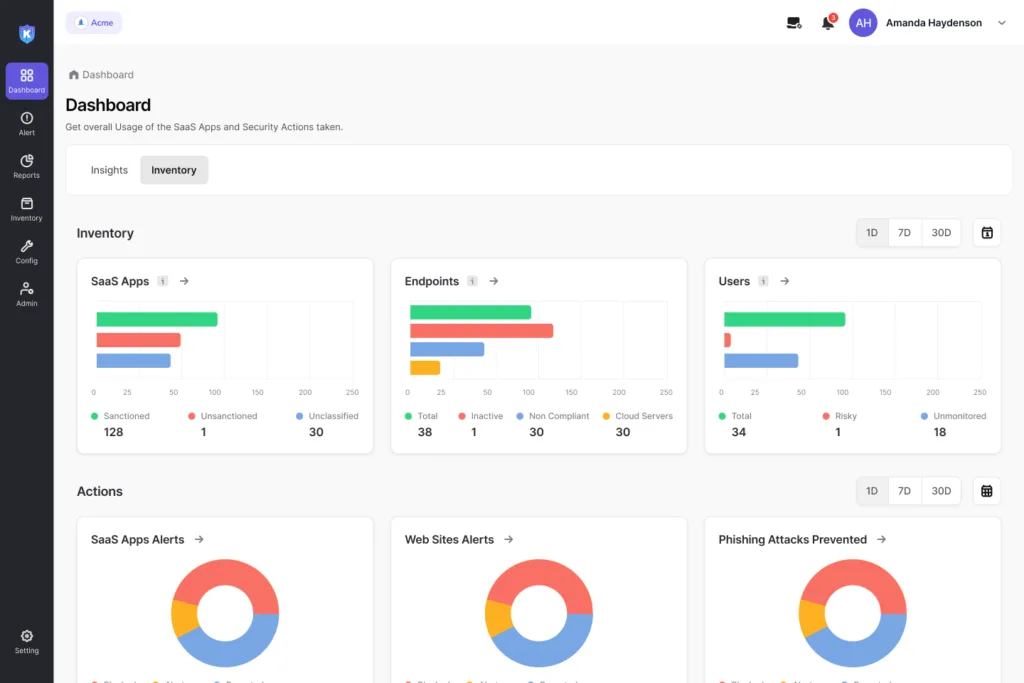
Kitecyber takes a different approach entirely. Instead of routing data through cloud gateways or network appliances, it installs a lightweight agent directly on the endpoint and enforces DLP, device management, and web security from one console. This matters most for teams dealing with BYOD, remote work, and GenAI risk, since Kitecyber tracks data lineage across SaaS apps, USB drives, and AI tools like ChatGPT and Gemini in real time.
Best for: Remote and hybrid teams that need GenAI and SaaS coverage without appliance overhead
2. Forcepoint DLP
Forcepoint is the heavyweight option. It ships with over 1,700 pre-built classifiers and uses Risk-Adaptive Protection to score user behavior and adjust policy enforcement automatically. The tradeoff is a steep learning curve and a setup process that usually calls for outside consultants.
Best for: Large enterprises with dedicated security teams and complex hybrid deployments
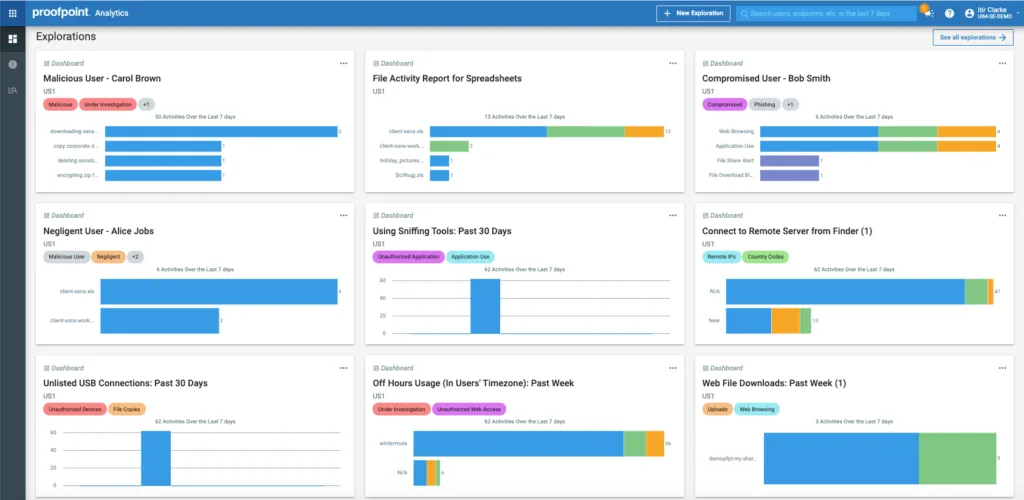
3. Proofpoint DLP
Proofpoint built its name on email security, and that still shows in its DLP suite. It integrates deeply with Exchange, Microsoft 365, and Google Workspace, and ships with 80-plus prebuilt policy templates for regulations like GDPR and HIPAA. Coverage outside of email and cloud tends to need extra tooling.
Best for: Regulated companies whose biggest risk is email and cloud data leaks
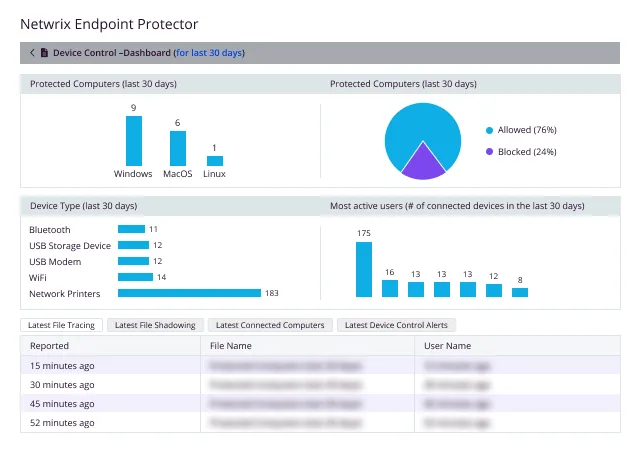
4. Netwrix Endpoint Protector
G2 ranks Netwrix Endpoint Protector as the top overall GTB alternative based on reviewer volume and satisfaction scores. It covers Windows, Mac, and Linux with
device control, content-aware protection, and eDiscovery, and it is generally considered easier to deploy than GTB or Forcepoint.
Best for: Mid-size teams wanting straightforward cross-platform
device control
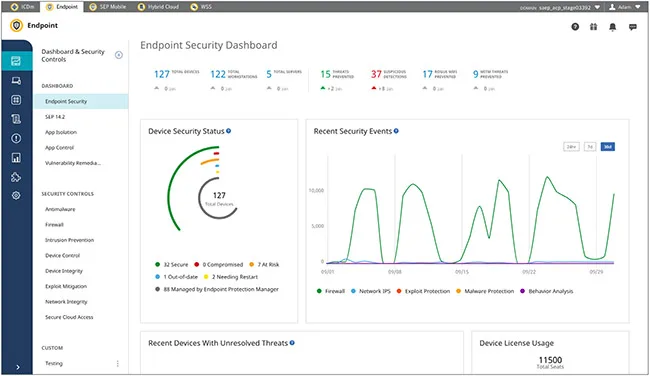
5. Symantec DLP (Broadcom)
Symantec DLP, now under Broadcom, remains one of the most established names in the category. It offers deep content inspection and strong integration with existing Symantec security stacks, which makes it a natural fit for organizations already invested in that ecosystem.
Best for: Enterprises already running other Broadcom or Symantec security tools
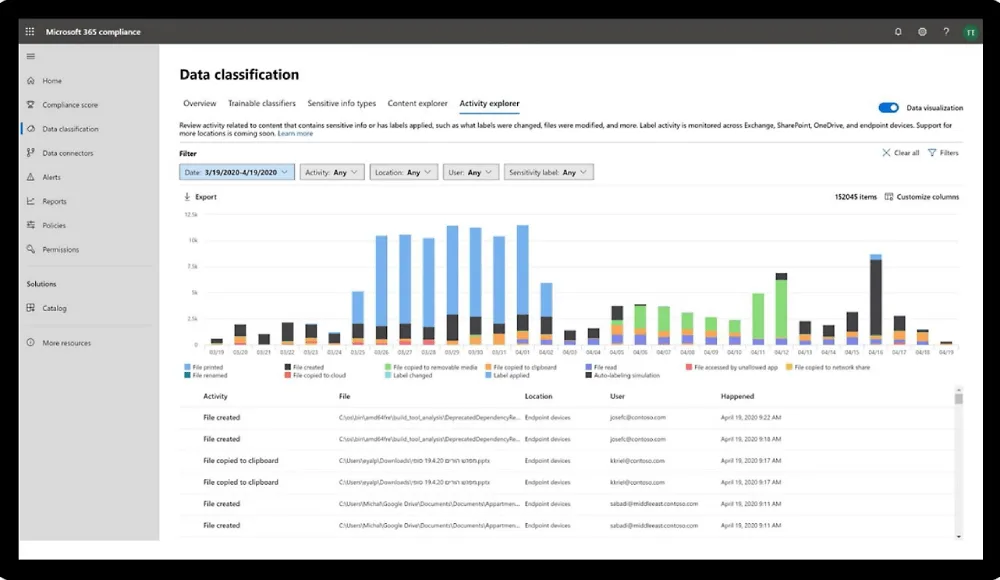
6. Microsoft Purview
If your organization already lives inside Microsoft 365, Purview offers a compelling path. It bundles DLP, information protection, and compliance management directly into the Microsoft ecosystem, which cuts down on vendor sprawl. Coverage outside Microsoft apps and services is more limited.
Best for: Microsoft 365-first organizations wanting DLP built into their existing stack
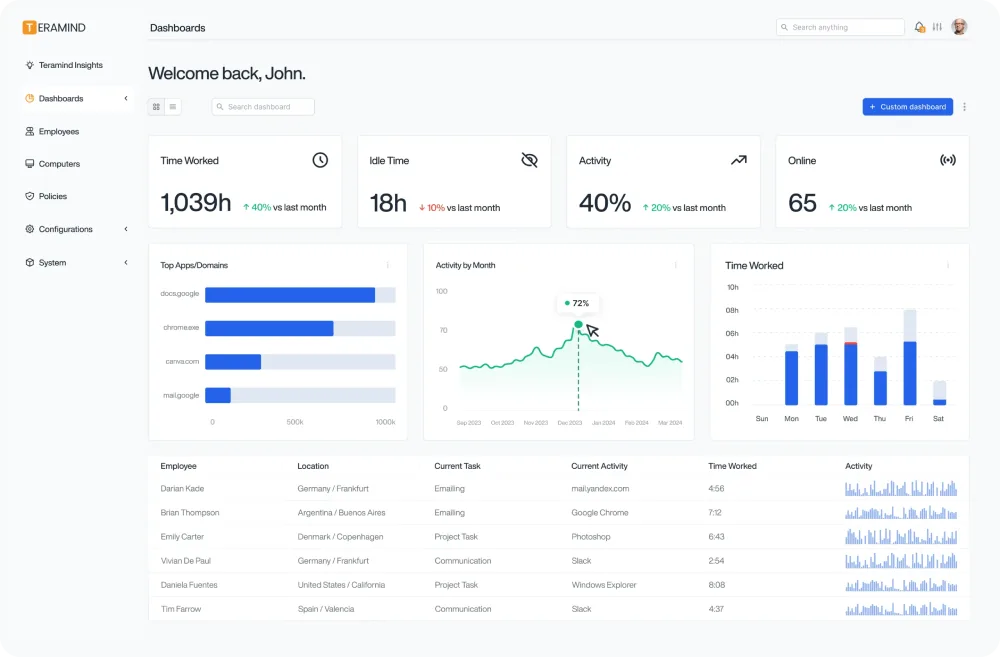
7. Teramind
Teramind leans into user behavior analytics and
insider threat detection, with session recording and productivity monitoring layered on top of its DLP controls. It suits teams that want visibility into intent, not just data movement.
Best for: Teams prioritizing
insider threat monitoring alongside basic DLP
See How Kitecyber Stacks Up Against GTB Technologies DLP
Book a live walkthrough and see how endpoint-native DLP catches leaks that gateway-based tools miss.
Kitecyber vs GTB Technologies DLP: Feature Comparison
Here is a direct side-by-side look at where each platform holds an edge. GTB scores well on fingerprinting accuracy. Kitecyber pulls ahead on deployment speed, GenAI coverage, and total cost of ownership.
|
Capability
|
Kitecyber
|
GTB Technologies DLP
|
|
Deployment Model
|
Pure endpoint agent, no gateways or appliances
|
Network appliances plus endpoint agents, more complex in multi-proxy setups
|
|
GenAI & SaaS Coverage
|
Native monitoring of ChatGPT, Gemini, Perplexity, and 1,500+ SaaS apps
|
Not a core focus, requires additional tooling for GenAI-specific risk
|
|
Cross-Platform Parity
|
Full feature parity across Windows, macOS, and Linux
|
Strong on Windows, roadmap still catching up on Mac and Linux features
|
|
False Positive Rate
|
Low, AI-driven contextual detection
|
Low, proprietary fingerprinting technology
|
|
Onboarding Time
|
Minutes to hours with zero-touch provisioning
|
Days to weeks depending on network complexity
|
|
Offline Protection
|
Full policy enforcement offline via endpoint agent
|
Strong offline protection, a core GTB differentiator
|
|
Pricing Model
|
Modular, per-user, pay only for active modules
|
Custom quote, typically bundled licensing
|
|
Support
|
Direct support with fast response times
|
Reviewers note company is under 10 years old with attentive but growing support team
|
Which Platform Fits Your Industry?
Both platforms shine in different corners of the market. Here is a realistic breakdown of where each one earns its keep.
Where GTB Technologies DLP Shines
GTB Technologies DLP is a strong fit for finance, healthcare, legal, and government organizations that handle PII, PHI, and PCI data at scale. Its fingerprinting technology and offline enforcement make it a reliable option for regulated industries where data cannot be allowed to move even when a device leaves the network. Teams with an established security operations function that can dedicate time to policy tuning get the most value here.
Where Kitecyber Shines
Kitecyber fits organizations managing distributed, remote, or BYOD teams that need fast rollout and real-time protection against SaaS and GenAI data leaks. Startups, mid-market SaaS companies, and any business without a large dedicated security team benefit from its single-agent architecture and modular pricing. It is also a strong pick for companies pursuing SOC 2, HIPAA, or ISO 27001 compliance, since policy templates and audit trails ship ready to configure out of the box.
What Real Users Say on G2, Gartner, and PeerSpot
Independent reviews tell a consistent story. GTB earns praise for accuracy and stability, with mixed marks on modern coverage.
Can't think of anything. Company appears to be relatively new, under 10 years old but the experience, attentiveness, availability, and patience is truly an advantage."
Many describe it as stable and reliable, with a high stability rate exceeding 99.99%."
It was hard to implement in a complex environment where the data was flowing through multiple proxy servers."
GTB Technologies Inspector currently ranks around 29th among top DLP solutions on PeerSpot, with an average rating of 8.2 out of 10. That’s a solid score, but it also shows why so many buyers keep a shortlist of alternatives on hand before renewal time.
How to Pick the Right GTB Technologies DLP Alternative
Before you sign a new contract, run through this checklist. It will save you from repeating the same evaluation cycle a year from now.
Ready to Replace GTB Technologies DLP?
Kitecyber deploys in minutes, covers GenAI and SaaS risk natively, and costs up to 60% less than legacy DLP stacks.
Frequently Asked Questions