Free-tier SaaS tools are the fastest-growing and least visible category of shadow IT because they require no procurement, no invoice, and no IT approval, only a work email and a signup form. An employee trying to move faster grabs a free plan of a notes app, a design tool, or an AI writing assistant, uploads a customer list or a snippet of source code to test it, and within minutes sensitive company data resides on a platform that security teams don’t know exists and can’t audit, back up, or delete on demand. Recent industry surveys indicate that approximately 80 percent of employees use unsanctioned SaaS applications, and the average organization runs about 975 untracked shadow IT cloud services against just 108 that are officially monitored. That gap is not a rounding error; it is the actual attack surface most companies are defending blind.
TL;DR
About the Author: This article is published by Kitecyber, a data security company built for the endpoint that helps security and IT teams at AI-native and SaaS companies (including DuploCloud, Lily AI, Vanta, and Scrut Automation) find and control
shadow IT and shadow GenAI before sensitive data leaves the organization.
What Makes Freemium Tools a Distinct Shadow IT Category?
Freemium shadow IT is any unsanctioned software an employee adopts because it is free to start, not because it was evaluated or approved. That distinction matters because it changes the incentive structure entirely. A paid SaaS tool needs a champion, a budget owner, and usually a procurement or security review before a contract gets signed, which naturally creates a checkpoint where IT can weigh in. A free tier skips every one of those checkpoints. An employee can go from “I heard about this tool” to “I’ve uploaded our roadmap to it” in the time it takes to read this paragraph.
Recent threat research identifies the categories where this happens most: Notion and Airtable for productivity, Slack and Google Drive for collaboration, free AI tools and design platforms for AI-assisted work, plus a long tail of unapproved social media analytics and specialized analytical applications. None of these tools are malicious. Each offers distinct capabilities. The risk isn’t the tool, it’s the fact that sensitive company data ends up inside it without anyone in security knowing it happened.
Why Do Free Tiers Carry More Risk Than Paid, Sanctioned SaaS?
Free tiers carry more risk because they frequently ship without the enterprise controls that make paid tiers auditable. Freemium SaaS tools often lack enterprise-grade encryption and granular access controls, which creates new attack surfaces for data exfiltration. When sensitive data lands on one of these unauthorized platforms, the organization loses visibility into where that data resides, who can access it, and whether it is ever deleted, which directly causes compliance violations under GDPR, HIPAA, and SOC 2 because there’s no way to audit or control it after the fact.
This is a different risk profile from a sanctioned SaaS app with a security review on file. A vetted vendor has a signed data processing agreement, a defined retention policy, and usually a security page you can point to during an audit. A free-tier signup has none of that; it has a terms-of-service page nobody read and a data residency policy that may not exist at all. Comparing the two:
|
Factor
|
Sanctioned, paid SaaS
|
Freemium shadow IT
|
|
Procurement/security review
|
Typically required
|
Skipped entirely
|
|
Data processing agreement
|
Usually in place
|
Rarely negotiated
|
|
Access controls
|
Role-based, admin-managed
|
Often single-user, no admin oversight
|
|
Audit trail for compliance
|
Available on request
|
Frequently unavailable
|
|
IT/security visibility
|
Tracked in asset inventory
|
Invisible until discovered
|
How AI Has Changed the Endpoint Threat Model
AI copilots and autonomous agents can read, copy, and exfiltrate sensitive data at machine speed, turning shadow IT from a slow-leak problem into a real-time one. Before AI copilots became a default browser tab, shadow IT risk accumulated gradually: an employee stored files in an unapproved cloud drive, and the exposure grew over weeks or months as more files piled up. That was a real problem, but it was a slow one, giving security teams time to eventually catch it during an audit or a vendor review.
AI agents and copilots removed that buffer. They can exfiltrate enormous volumes of sensitive data at machine speed, executing unauthorized data transfers in seconds rather than the minutes or hours a manual upload might take, often finishing before a security team is even aware anything happened. An employee doesn’t need to think of it as “sending data outside the company” when they paste a customer contract into a free AI tool for a quick summary; it feels like using a helpful assistant. But that paste action is functionally identical to an unauthorized data transfer, and it happens at a speed no human review process was designed to catch.
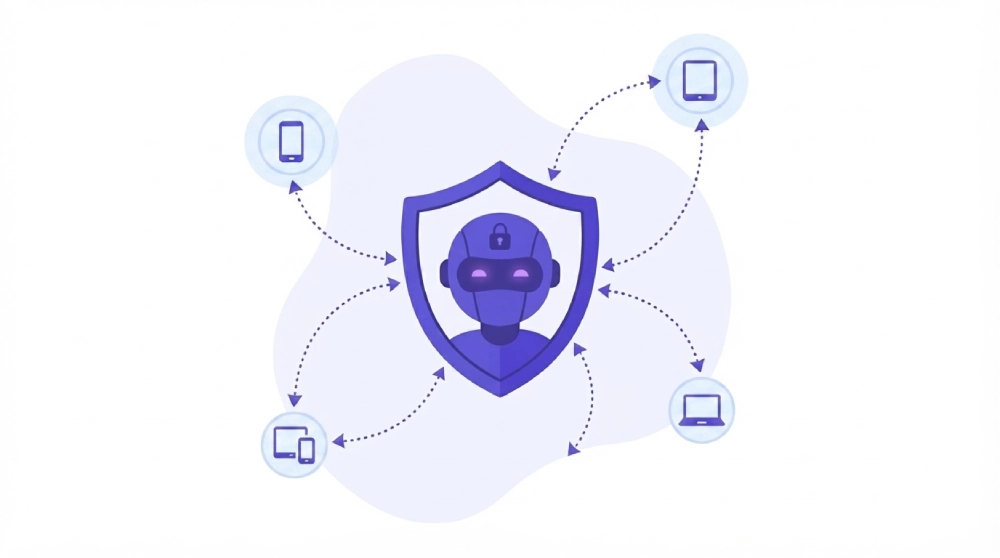
This is the core reason Kitecyber treats the endpoint, not the network perimeter, as the real decision point. The moment of risk isn’t when data crosses a firewall; it’s the moment an employee’s cursor is hovering over a paste box in a browser tab. Data security has to live at that point, because by the time traffic reaches a network inspection point, the decision has already been made.
Why Can't Traditional DLP or Network Tools Catch This?
Traditional DLP was built to watch structured file transfers and defined channels, not open-ended, natural-language activity in a browser. It relies on static rules and fixed transfer points, which means it’s tuned to catch a labeled file leaving through email or FTP, not an employee typing a paragraph of confidential product strategy into a chat window and hitting enter. There’s no file to fingerprint, no attachment to scan, just a prompt.
Network tools and legacy VPNs have a parallel gap. They inspect traffic and establish network trust, but they lack the context to tell the difference between an employee checking email and an autonomous AI agent quietly working through a SaaS API to exfiltrate records at machine speed. A network-trusting model assumes that once you’re on the network, your traffic is broadly legitimate; it wasn’t designed to ask what an AI agent acting on a user’s behalf is actually doing with that trust.
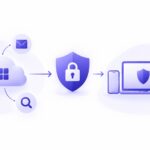
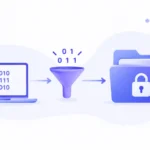
This is the gap Kitecyber was built to close. Instead of relying on network-level inspection or static file-matching rules, Kitecyber’s endpoint DLP software follows a continuous model: See, Decide, Enforce. The agent observes data movement across clipboard, browser uploads, GenAI prompts, and SaaS activity in real time; evaluates the action in context, considering who is acting, what data is involved, and where it’s headed; and enforces the appropriate control, whether that’s allow, warn, coach, block, or isolate, at the exact point the action happens. That’s the mechanism that makes real-time enforcement possible against freemium shadow IT and shadow GenAI: the decision is made at the endpoint, where the paste or upload actually occurs, not downstream after the data has already left.
What Should Security Teams Actually Do About Freemium Shadow IT?
Security teams should treat freemium SaaS discovery as a continuous data security function, not a one-time audit. A quarterly
shadow IT survey tells you what tools were popular last quarter; it does nothing for the free-tier signup that happened yesterday afternoon. Practical steps:
Kitecyber approaches this as a zero trust network access and data security platform in one lightweight endpoint-native agent, replacing legacy VPNs and fragmented point-solution stacks with a single system that sees
data lineage across files, browser, GenAI, and SaaS, then enforces policy in real time. For teams looking to move off a patchwork of point tools focused on network access, network inspection, or file-level DLP, that consolidation is often the more durable answer, since it removes the coordination gaps between separate agents rather than adding another one to the pile.
About Kitecyber
Kitecyber is a data security platform built around the endpoint, where sensitive data actually moves, including through freemium shadow IT, shadow GenAI apps, and agentic workflows that legacy tools were never designed to see. Its single lightweight agent unifies endpoint and network DLP, AI agent security, secure web gateway, SaaS app protection, and zero trust network access, removing the blind spots that come from stitching together multiple point solutions. Kitecyber supports compliance needs across HIPAA, GDPR, SOC 2, CMMC, and PCI DSS, and is used by AI-native and technology companies including DuploCloud, Lily AI, Vanta, Sarvam, and Scrut Automation. The company is built for teams that want to adopt AI and new SaaS tools confidently, without losing visibility into where their data goes.
If freemium shadow IT and shadow GenAI are creating blind spots your team can’t audit, visit Kitecyber to see how endpoint-native data security closes that gap in real time.
Frequently Asked Questions