Table Of Content
Related Posts

Forcepoint DLP: Features, Pricing, Pros, Cons, Alternative (2026 Guide)
-
May 12, 2026
-
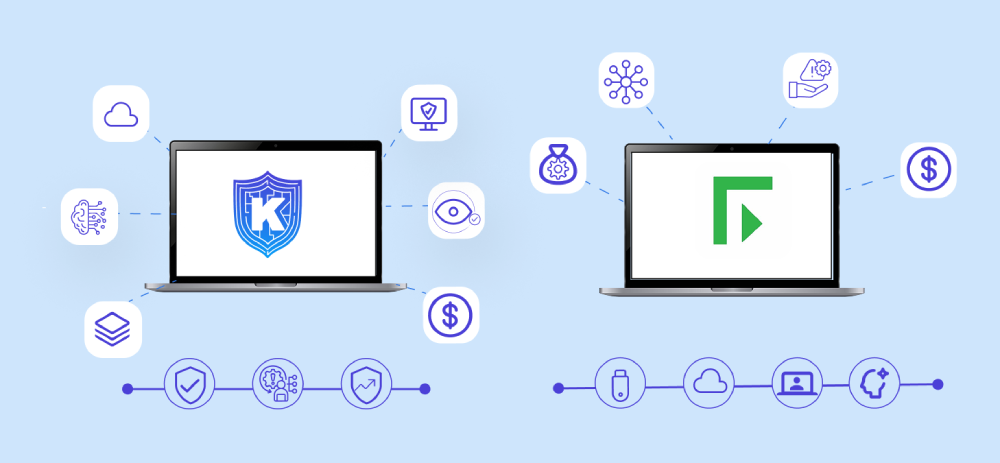
Summary: Forcepoint DLP solution has been at the forefront of data loss prevention for SMB’s and enterprise market. But is it even worth it? In this article, you will learn about Forcepoint Data Loss Prevention Solution, its features, its pricing, its reviews, alternative and pros/ cons.
Every 11 seconds, a business falls victim to a ransomware attack. Data exfiltration attempts are on the rise, and the cost of a data breach has soared to an average of $4.45 million. In an era where data is the new oil, are your traditional Data Loss Prevention (DLP) solutions truly safeguarding your most valuable assets, or are they leaving critical gaps for sophisticated threats to exploit?
For years, Forcepoint DLP has been a prominent name in data security, promising comprehensive protection across networks, clouds, and endpoints. But as cyber threats evolve and remote work becomes the norm, many organizations are questioning whether their existing DLP infrastructure can keep pace. Is Forcepoint DLP still the impenetrable fortress it claims to be, or are there hidden vulnerabilities that could put your sensitive data at risk?
This guide cuts through the marketing hype to deliver an unbiased, in-depth analysis of Forcepoint DLP in 2026. We’ll explore its features, pricing, and reveal whether or not there exist new generation DLP alternatives to forcepoint or not. Let’s dive right in!
What is Forcepoint DLP?
Forcepoint DLP is an established data security solution designed to help organizations discover, monitor, and protect sensitive information across various environments, including networks, cloud platforms, and endpoints. It aims to provide visibility and control over sensitive data, regardless of its storage location or access method.
The platform offers a mature approach to unifying policy management across different data channels. This includes data in motion, at rest, and in use, with the goal of preventing data breaches and ensuring regulatory compliance.
Forcepoint DLP integrates advanced content inspection with automated policy enforcement to secure critical data, such as intellectual property and personally identifiable information (PII), without hindering user productivity
The platform offers a mature approach to unifying policy management across different data channels. This includes data in motion, at rest, and in use, with the goal of preventing data breaches and ensuring regulatory compliance.
Forcepoint DLP integrates advanced content inspection with automated policy enforcement to secure critical data, such as intellectual property and personally identifiable information (PII), without hindering user productivity
Key Features of Forcepoint DLP:
Forcepoint DLP is recognized for its comprehensive library of classifiers and templates, offering a unified approach to policy management from a single dashboard
- Data Visibility and Discovery: The solution identifies and assesses sensitive data across on-premises, network, and cloud environments (IaaS, PaaS, SaaS). It utilizes AI tools for accurate data classification and employs patented fingerprinting technology to identify sensitive information in complex formats. Continuous monitoring detects security incidents in real-time
- Control and Policy Management: Forcepoint DLP enforces policies across critical egress channels, including cloud, web, email, network, and endpoint. Its Risk-Adaptive Protection (RAP) dynamically adjusts policies based on user behavior to prevent data exfiltration. AI-powered automation helps reduce false positives, and agentless email control addresses a common vector for data theft
- Compliance and Reporting: The platform offers over 1,700 out-of-the-box classifiers and policy templates for more than 80 countries, supporting compliance with regulations like GDPR, HIPAA, and CCPA. Centralized reporting provides real-time insights and audit-ready evidence. It also includes secure GenAI integration to control sensitive data sharing with generative AI platforms
- Deployment and Protection: Forcepoint DLP provides deployment flexibility with cloud-native (SaaS) or on-premises options. It offers endpoint protection for data in use and at rest, even off-network, and includes device control features to manage risky user actions such as screen captures, printing, or copying files to removable media.
Forcepoint Data Loss Prevention Pricing
Forcepoint DLP pricing is generally quoted on a custom basis, but industry data suggests it starts around $52 per user, annually for entry-level licensing, with comprehensive IP Protection suites costing more. It is a high-end enterprise solution often sold through resellers, with typical full-stack deployments ranging from $75 to $150+ per employee/year.
Key Pricing and Licensing Details (2026):
- Starting Price: Estimated around $51.99 - $52 per user/year.
- Licensing Model: Subscription-based.
- License Types: The solution is divided into IP Protection (high-end protection) and Compliance (standard regulations) modules.
- Endpoint Specifics: Specific endpoint protection, such as IP Protection for a single device over 39 months, has been listed at approximately $62.99.
- Deployment Options: Available for on-premises, cloud, and hybrid environment
The Double-Edged Sword: Pros and Cons of Forcepoint DLP
While Forcepoint DLP presents a robust feature set, real-world implementation and user experiences reveal a more nuanced picture. Organizations considering Forcepoint DLP must weigh its benefits against its potential drawbacks.
Advantages of Forcepoint DLP:
Forcepoint DLP offers several compelling advantages, particularly for large-scale enterprises with complex security needs:
- Simplified Policy Management: For some users, the platform offers an intuitive interface for creating and implementing new security policies, streamlining workflows for security teams
- Unified Incident Management: The solution provides a centralized management console for seamless control and incident response, which can be beneficial for managing security operations efficiently
- Cross-Platform Data Protection: Forcepoint DLP extends its coverage across Windows, Linux, and Mac environments, ensuring consistent security policies regardless of the operating system
Disadvantages of Forcepoint DLP:
Despite its strengths, Forcepoint DLP faces criticism regarding its usability and performance:
- Complex User Experience: New users often find Forcepoint DLP's interface counterintuitive, necessitating a dedicated onboarding period to master its functionalities
- Resource-Intensive Client: The endpoint client can be "heavyweight," potentially impacting system resources and overall device performance for end-users
- Limited Peripheral Device Control: The solution has shown limitations in effectively managing USB and mobile access, which can impact its overall effectiveness as a device control tool
- Negative User Sentiment: Discussions on platforms like Reddit indicate dissatisfaction with Forcepoint, citing issues with sales, outdated internal security practices (e.g., using old browsers), and concerns about customer service
When is Forcepoint DLP Worth It?
Forcepoint DLP is an enterprise-grade solution that delivers the most value to organizations with complex environments and high-stakes data protection requirements. It is particularly effective for large-scale operations where traditional, static security measures are insufficient
Here are some scenarios where Forcepoint DLP can be a worthwhile investment:
- Large Organizations with Complex IT Environments: Forcepoint is designed to handle the scale and intricacy of Fortune 500 security operations, excelling in organizations with over 200 users and those needing to protect data across hybrid and multi-cloud infrastructures
- Multinational Companies with Global Compliance Needs: Its extensive library of over 1,700 pre-built classifiers and templates for more than 80 countries makes it a significant asset for businesses operating in multiple jurisdictions, accelerating compliance with standards like GDPR, HIPAA, and CCPA
- Teams Ready for Risk-Adaptive Protection: Organizations with experienced security teams looking to move beyond basic blocking to behavioral analytics will find Forcepoint's Risk-Adaptive Protection (RAP) valuable. It uses native UEBA to calculate individual risk scores, dynamically adjusting controls in real-time
- Organizations Needing Unified Policy Control: For those struggling with tool sprawl and managing separate DLP policies for email, web, endpoint, and cloud, Forcepoint offers a unified console to create a single policy framework that follows data across all egress paths
- High-Risk Data Environments Requiring Deep Inspection: Companies protecting highly sensitive intellectual property, such as source code or blueprints, can benefit from Forcepoint's advanced detection capabilities
The Modern Solution: Why Kitecyber is the Best Forcepoint DLP Alternative
In an increasingly complex threat landscape, where remote work, BYOD policies, and generative AI tools are reshaping how data is accessed and shared, traditional DLP solutions often fall short. This is where Kitecyber emerges as a leading alternative, offering a modern, hyperconverged approach to data loss prevention that addresses the limitations of legacy systems like Forcepoint DLP.
Kitecyber is designed for the realities of modern work environments, providing robust, adaptive protection that is both faster and more reliable. Unlike in-network DLP solutions that can create blind spots, Kitecyber enforces policies directly on the endpoint, ensuring consistent, device-native protection whether users are on-network or not. This endpoint-first approach eliminates the need for cloud gateways or appliances, simplifying deployment and reducing infrastructure overhead
Kitecyber is designed for the realities of modern work environments, providing robust, adaptive protection that is both faster and more reliable. Unlike in-network DLP solutions that can create blind spots, Kitecyber enforces policies directly on the endpoint, ensuring consistent, device-native protection whether users are on-network or not. This endpoint-first approach eliminates the need for cloud gateways or appliances, simplifying deployment and reducing infrastructure overhead
Key Advantages of Kitecyber Over Forcepoint DLP:
Kitecyber distinguishes itself from Forcepoint DLP through several critical advantages, making it a compelling choice for organizations seeking advanced data protection:
- Hyperconverged Architecture: Kitecyber offers a single, lightweight agent that unifies endpoint DLP, USB control, network security, SaaS visibility, User Behavior Analytics (UBA), and real-time GenAI monitoring. This contrasts sharply with the fragmented, multi-tool approach often required with Forcepoint, which can lead to operational complexities and increased costs.
- Superior Cost-Effectiveness: With its modular, per-user, per-module pricing model, Kitecyber consistently delivers 60% or more in savings compared to comparable multi-vendor stacks. This allows organizations to pay only for the features they need, making it a more budget-friendly option without compromising on security.
- Built for Modern Work: Kitecyber is specifically engineered to secure remote and hybrid work environments, BYOD scenarios, and the use of generative AI tools like ChatGPT and Microsoft Copilot. It provides real-time detection and control of data shared with these AI platforms, a crucial capability in today's evolving digital landscape.
- Advanced Data Lineage: Kitecyber offers comprehensive data lineage tracking, capturing every file interaction, including copy, paste, rename, upload, and sharing actions, across endpoint and SaaS environments. This provides unparalleled visibility into data movement, enabling security teams to trace files from origin to destination.
- Context-Aware Policy Engine: The platform utilizes an AI-powered, context-aware policy engine that evaluates user identity, behavior, device trust, destination, and data sensitivity in real-time. This significantly reduces false positives and enables precise blocking, warning, or justification workflows, ensuring effective protection without disrupting legitimate operations.
- AI-Powered Data Classification: Kitecyber's AI-powered classification models go beyond traditional regex and keyword matching, analyzing content semantics and user behavior for more accurate identification of sensitive information. This leads to fewer false positives and more reliable data protection.
In essence, while Forcepoint DLP remains a viable option for certain established enterprise needs, Kitecyber represents the next generation of data loss prevention. It offers a more agile, integrated, and cost-effective solution tailored to the dynamic challenges of modern data security.
Frequently Asked Questions
Data Loss Prevention (DLP) refers to a set of tools and processes designed to ensure that sensitive data is not lost, misused, or accessed by unauthorized users. DLP solutions classify and protect confidential and critical information, preventing its unauthorized disclosure or exfiltration
Forcepoint DLP is a mature, enterprise-grade solution known for its unified policy management and extensive template library. However, it has been criticized for its complex user interface and resource-intensive endpoint client. Newer solutions like Kitecyber offer more agile, endpoint-first, and cost-effective approaches tailored for modern work environments
Traditional DLP solutions often struggle with real-world usability, accurate detection, and supporting modern work environments such as remote teams, hybrid work, BYOD, SaaS applications, and AI tools. They can also be complex to deploy and manage, leading to blind spots and operational overhead
Kitecyber is an endpoint-first, hyperconverged DLP solution that offers faster and more reliable security by enforcing policies directly on the device. It provides a single, lightweight agent for multiple security functions, is significantly more cost-effective, and is built specifically to secure modern work environments, including generative AI usage
An endpoint-first DLP approach ensures consistent, device-native protection whether users are on-network or not, eliminating blind spots. It allows for real-time enforcement decisions based on user intent, data sensitivity, and behavior, significantly reducing false positives and preventing data exfiltration at the point of action
SMBs typically adopt AI tools rapidly without mature governance controls. Employees may use personal AI accounts, unmanaged AI plugins, and autonomous workflow tools without security review. This increases the likelihood of data leaks and shadow AI exposure.
Key capabilities include:
- Endpoint DLP
- Browser activity visibility
- SaaS monitoring
- AI application discovery
- Behavioral analytics
- Zero Trust access
- Unified compliance controls
Yes. AI agents may access and process:
- Source code
- Financial data
- Customer records
- Credentials
- Internal documents
- SaaS data
Without proper controls, this information may be exposed through prompts, plugins, APIs, or autonomous workflows.
Ready to Experience Next-Generation Data Protection?
Don't let outdated DLP solutions leave your organization vulnerable. Discover how Kitecyber's innovative, endpoint-first approach can provide superior data protection, streamline your security operations, and deliver significant cost savings. Take control of your data security future today.

With over a decade of experience steering cybersecurity initiatives, my core competencies lie in network architecture and security, essential in today's digital landscape. At Kitecyber, our mission resonates with my quest to tackle first-order cybersecurity challenges. My commitment to innovation and excellence, coupled with a strategic mindset, empowers our team to safeguard our industry's future against emerging threats.
Since co-founding Kitecyber, my focus has been on assembling a team of adept security researchers to address critical vulnerabilities and enhance our network and user security measures. Utilizing my expertise in the Internet Protocol Suite (TCP/IP) and Cybersecurity, we've championed the development of robust solutions to strengthen cyber defenses and operations.
Posts: 101
With over a decade of experience steering cybersecurity initiatives, my core competencies lie in network architecture and security, essential in today's digital landscape. At Kitecyber, our mission resonates with my quest to tackle first-order cybersecurity challenges. My commitment to innovation and excellence, coupled with a strategic mindset, empowers our team to safeguard our industry's future against emerging threats.
Since co-founding Kitecyber, my focus has been on assembling a team of adept security researchers to address critical vulnerabilities and enhance our network and user security measures. Utilizing my expertise in the Internet Protocol Suite (TCP/IP) and Cybersecurity, we've championed the development of robust solutions to strengthen cyber defenses and operations.
Posts: 101