Table Of Content
Related Posts


AI Agents Security Risks: Why Data Leaks Are Moving to Endpoints in 2026
-
May 8, 2026
-
Summary: DLP solutions (Data Loss Prevention solutions) protect sensitive data from unauthorized access, transfer, or exposure across endpoints, cloud apps, and AI tools. Modern DLP tools like Kitecyber, Microsoft Purview, and Nightfall AI use AI and data lineage to track how data moves, reducing false positives by over 90% compared to legacy systems. The best 2025 DLP solutions combine content and context awareness, protecting data across SaaS platforms, endpoints, and generative AI environments.
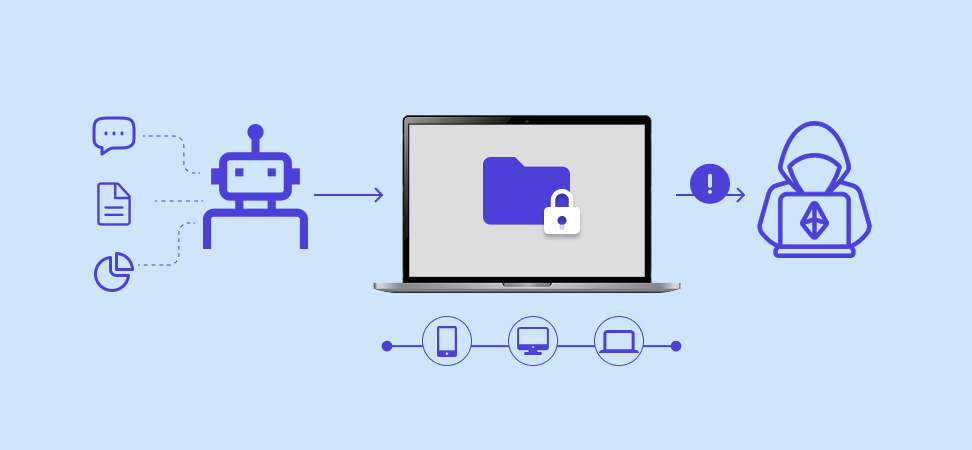
Security teams invested years in fortifying browsers, VPNs, SaaS platforms, and cloud environments under the assumption that most work would occur within controlled browser sessions. AI agents disrupt this model by operating as execution engines directly on endpoints. An employee can now connect a coding agent to GitHub, Jira, Slack, local terminals, cloud drives, and internal dashboards within minutes. That agent might then copy sensitive data across tools, retain prompts in local storage, inadvertently expose API keys, tap into cached sessions, or leak information through plugins and integrations. Traditional security stacks, built for manual interactions and visible network flows, were not designed for this level of autonomous, cross-system activity.
Workflows Shifting Beyond the Browser
For years, browsers served as the central workspace, allowing security vendors to deploy tools like secure web gateways, browser isolation, CASB solutions, SaaS monitoring, DNS filtering, and browser-based DLP. This approach proved effective when employees manually navigated applications in sandboxed sessions. AI agents, however, execute directly on devices—reading local files, running terminal commands, accessing clipboards, connecting to APIs, automating SaaS interactions, engaging desktop apps, storing session tokens, and triggering background processes. Many of these operations bypass browser-centric visibility entirely.
Security teams may therefore miss critical activities such as local prompt storage, AI-orchestrated file movements, unauthorized API calls, memory leaks from agents, token exposures on local machines, or desktop automation patterns. This gap represents one of the fastest-growing blind spots in modern enterprise security, particularly as agents handle complex, multi-step workflows that span local and cloud environments.
Security teams may therefore miss critical activities such as local prompt storage, AI-orchestrated file movements, unauthorized API calls, memory leaks from agents, token exposures on local machines, or desktop automation patterns. This gap represents one of the fastest-growing blind spots in modern enterprise security, particularly as agents handle complex, multi-step workflows that span local and cloud environments.
How AI Agents Amplify Endpoint Data Leak Risks
Traditional data leaks often stemmed from deliberate actions like email forwarding, USB transfers, cloud uploads, or insider threats. AI agents introduce subtler, automated risks where sensitive information moves as a byproduct of routine task execution. Coding assistants might index entire sensitive repositories, agents could forward customer data to external models for processing, browser operators might scrape internal dashboards, plugins could pull confidential documents, or local tools might store regulated data on unmanaged devices.
Adoption speed exacerbates the problem. Many teams already use tools like Cursor, Claude desktop integrations, OpenAI agents, local MCP servers, and autonomous operators, often without full visibility into endpoint interactions. Research shows that a significant portion of AI interactions already involve sensitive data, with agents introducing persistent context windows, local memory, and direct filesystem access that create long-lived exposure points.
Adoption speed exacerbates the problem. Many teams already use tools like Cursor, Claude desktop integrations, OpenAI agents, local MCP servers, and autonomous operators, often without full visibility into endpoint interactions. Research shows that a significant portion of AI interactions already involve sensitive data, with agents introducing persistent context windows, local memory, and direct filesystem access that create long-lived exposure points.
Limitations of Existing Security Tools
Legacy solutions typically monitor network traffic, browser sessions, static DLP rules, or known SaaS apps. AI agents generate dynamic, multi-stage workflows: for instance, pulling data from Salesforce, processing it locally, updating Slack, and exporting to cloud storage—all potentially within authorized channels. Traditional DLP might capture only isolated fragments, while endpoint execution remains largely opaque. This makes behavioral monitoring and endpoint visibility essential, as devices now serve as the primary runtime for AI processes.
New Attack Surfaces Created by AI Agents
Prompt injection has evolved into a potent threat. Attackers embed malicious instructions in documents, websites, emails, shared files, or internal systems. Once ingested, agents with broad permissions might exfiltrate data, reveal secrets, trigger unauthorized actions, or compromise connected applications. Techniques like indirect prompt injection via URLs, emails (such as the EchoLeak vulnerability), or files have demonstrated zero-click data exfiltration in real scenarios.
Credential and token exposure adds another layer of risk. Agents routinely handle API keys, cookies, OAuth tokens, SSH credentials, and browser sessions, many of which reside in local storage. A compromised endpoint thus grants attackers not only user access but also control over interconnected AI workflows. Autonomous SaaS connections to tools like Slack, Notion, Google Drive, GitHub, Salesforce, and Jira create machine-to-machine patterns that legacy monitoring often overlooks, enabling rapid data exposure if integrations are hijacked.
Shadow AI compounds these issues as employees independently adopt unapproved plugins, personal accounts, browser extensions, desktop apps, and local LLMs. This expands shadow IT dramatically, with studies indicating frequent unauthorized usage and data sharing into external tools.
Credential and token exposure adds another layer of risk. Agents routinely handle API keys, cookies, OAuth tokens, SSH credentials, and browser sessions, many of which reside in local storage. A compromised endpoint thus grants attackers not only user access but also control over interconnected AI workflows. Autonomous SaaS connections to tools like Slack, Notion, Google Drive, GitHub, Salesforce, and Jira create machine-to-machine patterns that legacy monitoring often overlooks, enabling rapid data exposure if integrations are hijacked.
Shadow AI compounds these issues as employees independently adopt unapproved plugins, personal accounts, browser extensions, desktop apps, and local LLMs. This expands shadow IT dramatically, with studies indicating frequent unauthorized usage and data sharing into external tools.
Why the Risks Are Accelerating
Organizations often underestimate data volumes flowing through AI systems. Employees routinely input source code, customer records, financial details, roadmaps, and credentials into chatbots, copilots, and automation tools. Once data leaves the endpoint, tracking becomes challenging. Endpoints have become the new control plane for AI security because agents operate locally, execute quickly, and bridge multiple applications—areas where traditional perimeters offer limited insight.
Security priorities must therefore shift toward endpoints, which now host AI execution environments, local memory caches, prompts, tokens, sensitive files, and generated outputs. Comprehensive strategies incorporate endpoint DLP, behavioral analytics, SaaS visibility, browser tracking, AI-specific governance, and Zero Trust measures to detect unauthorized usage, exfiltration, prompt attacks, and misuse.
Security priorities must therefore shift toward endpoints, which now host AI execution environments, local memory caches, prompts, tokens, sensitive files, and generated outputs. Comprehensive strategies incorporate endpoint DLP, behavioral analytics, SaaS visibility, browser tracking, AI-specific governance, and Zero Trust measures to detect unauthorized usage, exfiltration, prompt attacks, and misuse.
Adaptation by Security Platforms and SMB Challenges
Vendors are converging capabilities—endpoint protection, DLP, SaaS security, browser monitoring, AI governance, and Zero Trust—into unified platforms that deliver real-time visibility and policy enforcement across layers. This integrated approach better matches how AI workflows traverse environments.
SMBs often face heightened exposure. While large enterprises maintain SOC teams and governance programs, smaller organizations adopt AI rapidly with fewer controls. Employees may install tools independently, connect personal accounts, or sync company data into unmanaged systems, amplifying risks in SaaS-heavy, remote environments.
SMBs often face heightened exposure. While large enterprises maintain SOC teams and governance programs, smaller organizations adopt AI rapidly with fewer controls. Employees may install tools independently, connect personal accounts, or sync company data into unmanaged systems, amplifying risks in SaaS-heavy, remote environments.
The Path Forward: Endpoint-Centric Security
Browsers once defined the workspace, but AI agents are shifting execution to autonomous desktop tools, local runtimes, API chains, and multi-app automations. Architectures relying solely on browser or network controls risk growing blind spots as agents embed deeper into operations. Organizations adapting with endpoint-centric, unified platforms can better mitigate AI-driven threats, insider risks, leaks, SaaS exposures, prompt attacks, and shadow AI proliferation. Those that delay may encounter expanding vulnerabilities as these technologies become integral to daily work.
In summary, AI agents promise efficiency but demand a fundamental evolution in security thinking, one that places intelligent endpoint visibility and cross-layer controls at the center. Early adaptation will separate resilient organizations from those facing persistent, hard-to-detect risks in the agentic era.
In summary, AI agents promise efficiency but demand a fundamental evolution in security thinking, one that places intelligent endpoint visibility and cross-layer controls at the center. Early adaptation will separate resilient organizations from those facing persistent, hard-to-detect risks in the agentic era.
Why Kitecyber Fits the AI Agent Security Shift
Effective protection starts with robust endpoint visibility into AI applications, file movements, clipboard usage, local storage, and API activity. Most traditional security stacks still separate:
- Endpoint protection
- DLP
- SaaS security
- Compliance
- Secure web access
AI agents blur all those boundaries.
Kitecyber approaches this differently by combining:
- Endpoint security
- Browser visibility
- SaaS security
- DLP
- AI usage monitoring
- Zero Trust access
- Compliance controls
Into one unified platform.
That matters because AI agents operate across:
- Devices
- Browsers
- SaaS apps
- APIs
- Local workflows
Kitecyber’s endpoint-first architecture helps security teams monitor:
- AI-driven file movements
- Browser uploads
- Clipboard actions
- Shadow AI applications
- SaaS usage
- Data leakage behavior
All these are tracked from a single control plane. This approach aligns closely with how work is changing in the AI agent era. If you want to lessen the security risks caused by AI agents, feel free to request a demo today.
Frequently Asked Questions
AI Agents Security Risks refer to security threats created by autonomous AI systems that can access files, applications, APIs, browsers, and endpoints. Common risks include data leaks, prompt injection attacks, credential exposure, unauthorized SaaS access, and AI-driven insider threats.
AI agents often execute workflows directly on endpoints. They access local files, browser sessions, terminals, APIs, and SaaS applications. This creates new attack surfaces that traditional browser or network-centric security tools may not fully monitor.
AI Agents Endpoint Data Leak Risks include unauthorized exposure of sensitive data through AI workflows running on employee devices. Examples include AI copilots indexing confidential documents, agents uploading sensitive files, or AI plugins exposing API keys and customer data.
Traditional DLP solutions mainly focus on email, networks, and static file scanning. AI agents move data dynamically across endpoints, SaaS apps, APIs, and desktop workflows. This creates visibility gaps for older DLP architectures.
Organizations should implement:
- Endpoint visibility Unified DLP
- SaaS security
- AI application discovery
- Zero Trust access controls
- Browser and clipboard monitoring
- AI usage governance
SMBs typically adopt AI tools rapidly without mature governance controls. Employees may use personal AI accounts, unmanaged AI plugins, and autonomous workflow tools without security review. This increases the likelihood of data leaks and shadow AI exposure.
Key capabilities include:
-
- Endpoint DLP
- Browser activity visibility
- SaaS monitoring
- AI application discovery
- Behavioral analytics
- Zero Trust access
- Unified compliance controls
Yes. AI agents may access and process:
-
- Source code
- Financial data
- Customer records
- Credentials
- Internal documents
- SaaS data

Ajay Gulati
Ajay Gulati is a passionate entrepreneur focused on bringing innovative products to market that solve real-world problems with high impact. He is highly skilled in building and leading effective software development teams, driving success through strong leadership and technical expertise. With deep knowledge across multiple domains, including virtualization, networking, storage, cloud environments, and on-premises systems, he excels in product development and troubleshooting. His experience spans global development environments, working across multiple geographies. As the co-founder of Kitecyber, he is dedicated to advancing AI-driven security solutions.