Table Of Content
Related Posts


7 GDPR Data Discovery Software 2026 (To Avoid Massive Fines)
-
December 9, 2025
-
Summary: GDPR data discovery tools help you find, classify, and monitor sensitive information across cloud services, endpoints, and SaaS apps before it becomes a compliance risk. This guide ranks the 7 best GDPR data discovery software for 2025, with Kitecyber Data Shield, OneTrust, BigID, Varonis, Osano, etc.
European regulators handed out more than €1.2 billion in fines in 2024.
And the surprising part? These penalties usually aren’t caused by advanced cyberattacks. Most companies simply don’t know where their data is.
You can’t protect something you can’t see. If you don’t know where sensitive customer information lives, staying compliant with GDPR becomes almost impossible.
That’s when data discovery for GDPR comes into picture. GDPR data discovery is the automated process of identifying, classifying, and mapping personal data across your entire IT infrastructure. This foundational step allows businesses to locate sensitive information across cloud, on-premise, and endpoint systems to ensure compliance. It also enables accurate responses to Data Subject Access Requests (DSARs). Along with discovering and managing personal data, organizations must also consider AI Compliance, to ensure all AI‑driven processes meet evolving regulatory standards.
Manual spreadsheets and annual audits fail. Data moves too fast. Employees share files on Slack. They upload customer lists to unauthorized AI tools. They store sensitive records on local drives.
You need a gdpr data discovery software to automate this workload. In this guide, you will discover why GDPR data discovery matters more than ever. You will learn what defines a reliable GDPR data discovery solution. You will also discover a list of top gdpr data discovery solutions available right now.
Why GDPR Data Discovery Is a Must
Many companies treat GDPR data discovery as a checkbox exercise. This is a mistake.
Knowing where your data lives is the foundation of all security. You cannot secure a server if you do not know it exists. You cannot protect a customer list if you do not know an employee saved it to their personal Dropbox.
Effective discovery improves your operational efficiency. It highlights redundant data you can delete, saving on storage costs. It identifies risky employee behaviors you can correct with training.
Here are 10 reasons why you need data discovery for GDPR compliance:
Many organizations store personal data across multiple systems: file shares, cloud drives, endpoints, legacy servers, SaaS apps, maybe even forgotten backups. Without data discovery, this creates blind spots. According to CSOOnline, 62% of security pros don’t know where their sensitive data is.
If you lack an accurate map of your data, you won’t be able to comply with GDPR requirements around data deletion, portability, or consent. Programs that relied solely on manual spreadsheets or simple BI tools fall short.
If you lack an accurate map of your data, you won’t be able to comply with GDPR requirements around data deletion, portability, or consent. Programs that relied solely on manual spreadsheets or simple BI tools fall short.
GDPR doesn’t just require you to store data securely; it demands that you know what personal data you process, where it lives, and how it flows. Data discovery is the first essential step. Without it, your compliance posture remains incomplete.
A robust data discovery tool doesn’t just scan; it classifies data, identifies PII (personally identifiable information) or other sensitive content, and enables you to manage data properly, whether that means deletion, masking or access controls.
A robust data discovery tool doesn’t just scan; it classifies data, identifies PII (personally identifiable information) or other sensitive content, and enables you to manage data properly, whether that means deletion, masking or access controls.
With data volumes growing rapidly, more endpoints, more cloud services, more SaaS apps — manual discovery becomes impractical. You risk missing data, misclassifying it, or simply being overwhelmed. Automation offers consistency, speed and audit-ready reporting.
Files, email attachments, legacy documents, images, sensitive data can be buried deep in unstructured content. Without advanced classification and scanning, such data remains invisible. Many GDPR data discovery tools now support machine-learning based classification to handle unstructured content.
It is vital to know not only where data resides but also how it moves. Data copy, transfer, uploads, these actions can create compliance gaps. Endpoint discovery integrated with data loss prevention (DLP) can monitor these flows and minimize risk.
Compliance audits, internal or external, require documentation: data inventory, where personal data is stored, classification levels, logs, access controls, data flows. A good GDPR data discovery solution helps generate audit-ready reports fast.
GDPR gives individuals the right to request their data (export), deletion, or correction. If you don’t know where the data is, responding becomes messy or impossible. With a discovery tool and clear data mapping, you can locate and act promptly.
Regulators impose steep fines for non-compliance. In addition, data breaches — especially from unknown or unmanaged data — can cost millions in remediation and reputation damage. Data discovery helps pre-empt these risks.
Modern organizations often use cloud, on-premise servers, remote endpoints, BYOD devices, SaaS applications and more. A GDPR data discovery solution built to handle hybrid setups ensures coverage everywhere.
Once set up, data discovery isn’t a one-time task. Data changes constantly. New files get created. People join and leave. Data flows shift. A continuous, automated discovery process helps you stay compliant over time and maintain data hygiene.
How to Choose a GDPR Data Discovery Software
When evaluating a solution for GDPR data discovery or data discovery for GDPR, you should look for the following qualities:
- Ability to scan across a wide range of data sources: endpoints (devices), file servers, databases, cloud storage, SaaS apps.
- Classification of both structured and unstructured data (documents, emails, images, attachments, legacy data, etc.).
- Automated or configurable policies to classify sensitive data according to GDPR definitions (PII, personal identifiers, etc.).
- Continuous monitoring and data-movement tracking, not only data at rest but also file transfers, uploads, downloads, copy-paste, USB transfers, etc.
- Audit-ready reporting, logs, and compliance documentation to support regulatory audits.
- Ease of deployment, scalability, and support for mixed environments (cloud + on-prem + hybrid).
- Audit-ready reporting, logs, and compliance documentation to support regulatory audits.
7 Best GDPR Data Discovery Software of 2026 (To Avoid Massive Fines)
In this section, we rank the top software for gdpr data discovery available right now. We analyzed Reddit discussions, user reviews, and technical specifications to find tools that actually work. We prioritize solutions that handle modern threats like Shadow SaaS discovery and AI usage.
Here are the best tools to secure your data and keep the regulators away.
Here are the best tools to secure your data and keep the regulators away.
Best for: Modern teams needing real-time, endpoint-based discovery and AI control.
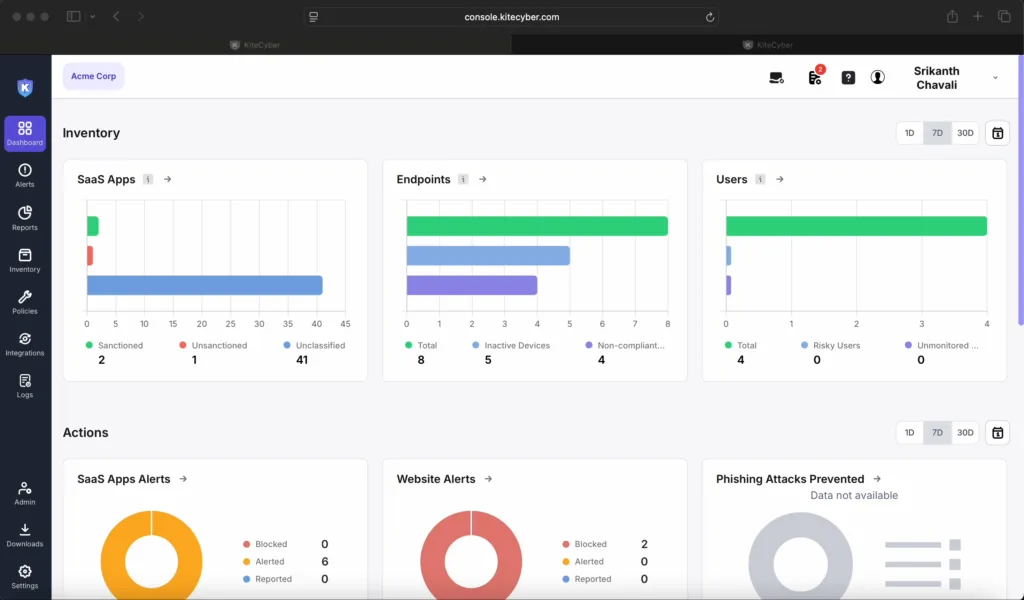
Kitecyber Data Shield takes a different approach than legacy competitors. Most gdpr data discovery software relies on heavy network scanners or API connectors that miss data stored locally on laptops. Kitecyber uses a lightweight AI Copilot that sits directly on the endpoint and tracks the data lineage on endpoint and network.
This architecture allows it to see everything. It detects sensitive data the moment a user creates it, downloads it, or tries to upload it to an unsanctioned app.
This architecture allows it to see everything. It detects sensitive data the moment a user creates it, downloads it, or tries to upload it to an unsanctioned app.
Why it is the top choice: Shadow IT is the biggest blind spot for GDPR compliance today. Employees sign up for new SaaS tools without IT knowing. Kitecyber identifies these “Shadow SaaS” applications instantly. It allows you to block the risky ones and sanction the safe ones.
If an employee tries to paste customer emails into ChatGPT, Kitecyber detects the PII (Personally Identifiable Information) and tracks the action in real-time.
If an employee tries to paste customer emails into ChatGPT, Kitecyber detects the PII (Personally Identifiable Information) and tracks the action in real-time.
Key Features:
- Endpoint-Based Discovery: Discovers GDPR data on Windows, macOS, and Linux devices, even when they are off the corporate network.
- Real-Time Remediation: Blocks sensitive data exfiltration (like uploading a credit card list to a personal Gmail) instantly.
- Shadow IT Visibility: Automatically catalogs every SaaS app in use, helping you build your ROPA (Record of Processing Activities) effortlessly.
- AI-Powered Classification: Uses advanced AI to differentiate between a harmless spreadsheet and one containing sensitive GDPR data.
- Single Agent: Combines discovery, classification, DLP (Data Loss Prevention), and web filtering into one lightweight agent.
Verdict: Kitecyber is the most agile gdpr data discovery software for 2026. It covers the gaps that traditional network-based tools miss, specifically around remote work and GenAI usage.
2. OneTrust
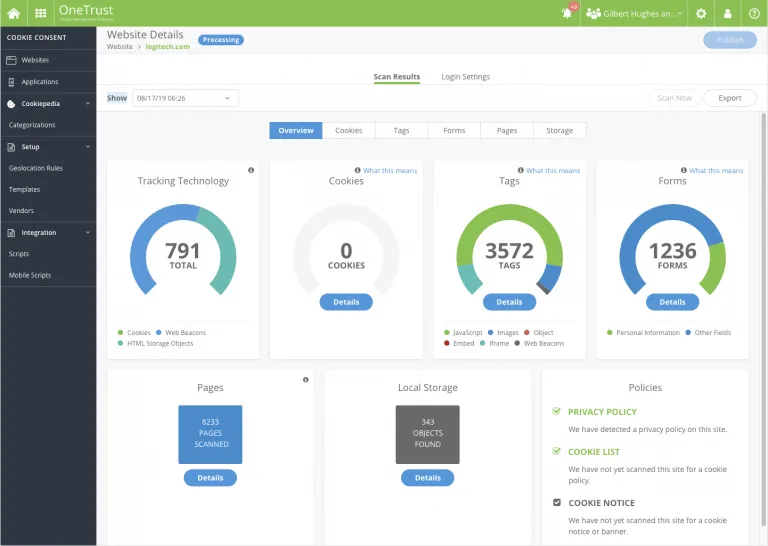
Best for: Large enterprises with complex governance needs.
OneTrust is often the first name people hear in privacy. It is a massive platform that covers every possible aspect of GRC (Governance, Risk, and Compliance).
For gdpr compliance data discovery, OneTrust offers a powerful scanning engine. It connects to hundreds of data sources, from SQL databases to cloud storage buckets.
Pros:
- Comprehensive: If you need to manage vendor risk, cookie consent, and DSAR (Data Subject Access Requests) in one place, OneTrust does it all.
- Market Standard: It is widely recognized by auditors and regulators.
- Huge Integration Library: Connects to almost any enterprise system you use.
Cons:
- Complexity: The platform is vast. Implementation often takes months and requires dedicated staff to manage.
- Cost: It is one of the most expensive options on the market.
- Overkill for Mid-Market: Smaller companies often pay for features they never use.
Verdict: If you have a large budget and a dedicated compliance team, OneTrust is a solid, safe choice. For anyone else, it might be too heavy.
3. BigID
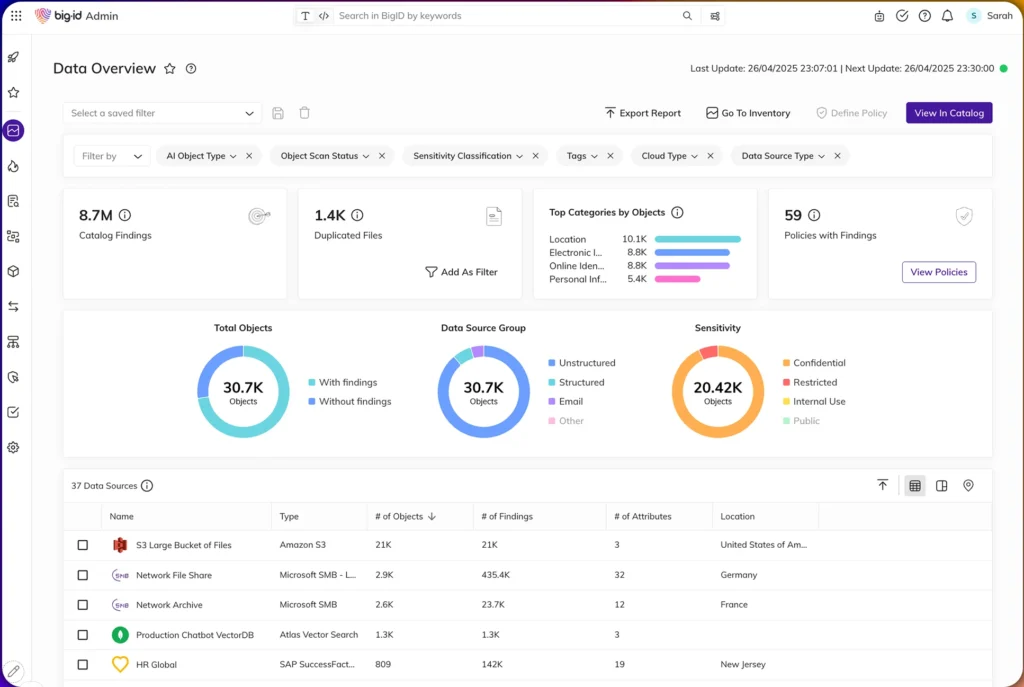
Best for: Deep data mapping and structured data discovery.
BigID built its reputation on being able to scan massive amounts of structured data. It excels at connecting to your data lakes and warehouses (like Snowflake or AWS S3) to build a complete map of your personal data.
It focuses heavily on the “identity” part of data. BigID can look at a piece of data and tell you exactly which customer it belongs to. This makes handling specific user deletion requests much easier.
It focuses heavily on the “identity” part of data. BigID can look at a piece of data and tell you exactly which customer it belongs to. This makes handling specific user deletion requests much easier.
Pros:
- Identity Intelligence: exceptional at correlating data fragments back to a single person.
- Wide Coverage: Scans mainframe data, cloud data, and on-prem databases effectively.
- Automation: heavily automates the data mapping process required for Article 30 reports.
Cons:
- Resource Intensive: Scanning petabytes of data requires significant compute power and budget.
- Learning Curve: The interface is technical and geared towards data engineers rather than general IT managers.
Verdict: BigID is a powerhouse for organizations that hoard massive amounts of customer data in databases.
4. Varonis
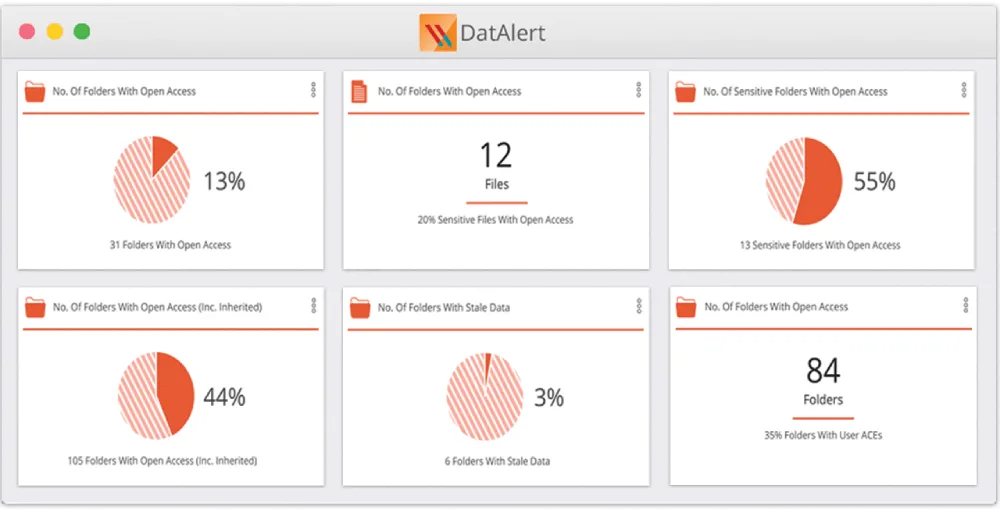
Best for: Protecting unstructured data and preventing insider threats.
Varonis looks at data through a security lens. It specializes in unstructured data—the files sitting in your Word documents, Excel sheets, and PDFs on corporate servers.
Its strength lies in analyzing permissions. Varonis tells you who has access to sensitive GDPR data and, more importantly, who should not have access. It monitors user behavior to spot anomalies, such as an employee suddenly downloading 500 sensitive files.
Its strength lies in analyzing permissions. Varonis tells you who has access to sensitive GDPR data and, more importantly, who should not have access. It monitors user behavior to spot anomalies, such as an employee suddenly downloading 500 sensitive files.
Pros:
- Permission Visualization: Shows you exactly which folders have "Everyone" access and helps you lock them down.
- Insider Threat Detection: Alerts you when a user behaves suspiciously with sensitive data.
- Automated Classification: Scans file servers and tags sensitive documents automatically.
Cons:
- On-Prem Heritage: While it has cloud versions, it feels most at home in traditional Windows Server environments.
- Price: specialized security focus comes with a premium price tag.
Verdict: If your main worry is employees stealing files or ransomware encrypting your file servers, Varonis is a strong data discovery for gdpr choice.
5. Osano
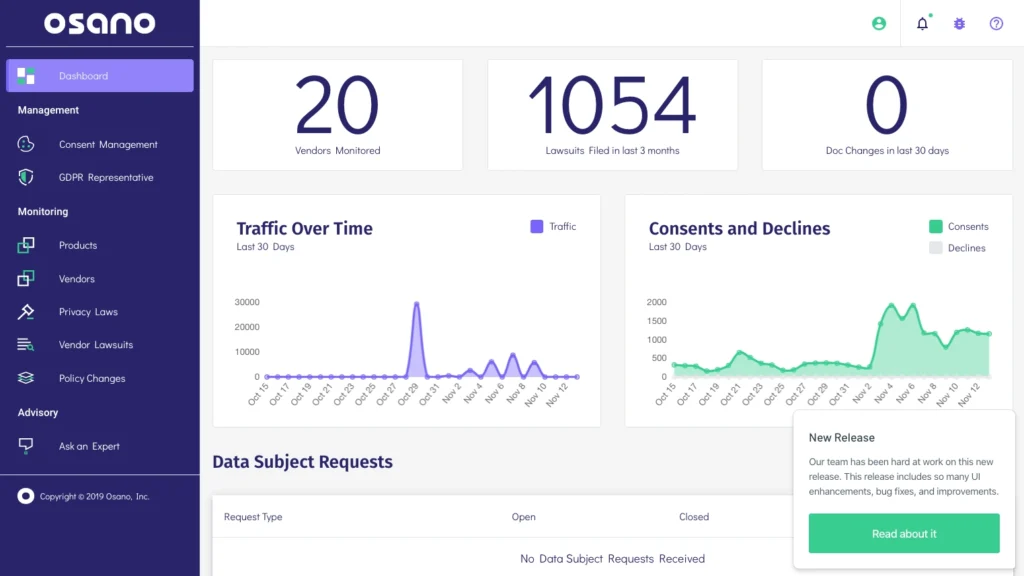
Best for: Growing companies that need simple, fast compliance.
Osano positions itself as the easiest data privacy platform to use. It gained popularity for its “No Fines, No Penalties” pledge (for certain plans), which shows their confidence in their product.
For discovery, Osano connects to your SaaS applications to identify where personal data lives. It focuses on the vendor side of things, helping you rate the privacy practices of the software you use.
For discovery, Osano connects to your SaaS applications to identify where personal data lives. It focuses on the vendor side of things, helping you rate the privacy practices of the software you use.
Pros:
- User Experience: The interface is clean, modern, and intuitive.
- Speed: You can get up and running in days, not months.
- Vendor Risk: Excellent database of vendor privacy scores to help you choose safe tools.
Cons:
- Limited Depth: It does not go as deep into scanning endpoints or custom databases as Kitecyber or BigID.
- Focus: primarily a consent and vendor management tool, with discovery as a secondary feature.
Verdict: Osano is excellent for mid-sized tech companies that need to check the GDPR box quickly without hiring a massive compliance team.
6. Spirion
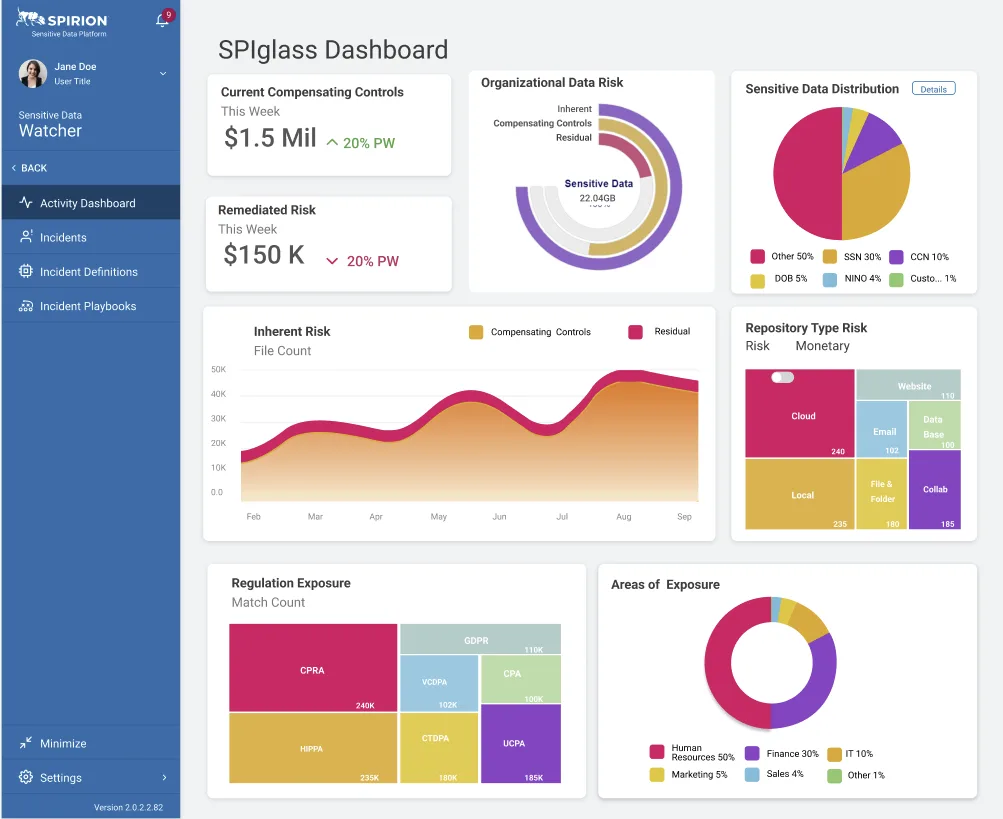
Best for: Locating sensitive data in legacy systems.
Spirion (formerly Identity Finder) has been around for a long time. It is a highly accurate tool for hunting down PII in specific locations like hard drives, emails, and shared folders.
It claims an extremely low false-positive rate. This means when Spirion says a file contains a social security number or a credit card, it is usually right.
It claims an extremely low false-positive rate. This means when Spirion says a file contains a social security number or a credit card, it is usually right.
Pros:
- Accuracy: Strong pattern matching reduces the time teams spend reviewing false alarms.
- Remediation: Allows you to shred or redact files directly from the console.
- Legacy Support: Works well in older IT environments.
Cons:
- Endpoint Agents: agent management can be clunky compared to modern cloud-native solutions.
- UI: The interface feels dated compared to newer SaaS platforms.
Verdict: Spirion is a tactical tool. Use it if you have a specific need to clean up legacy file servers or desktops.
7. Transcend
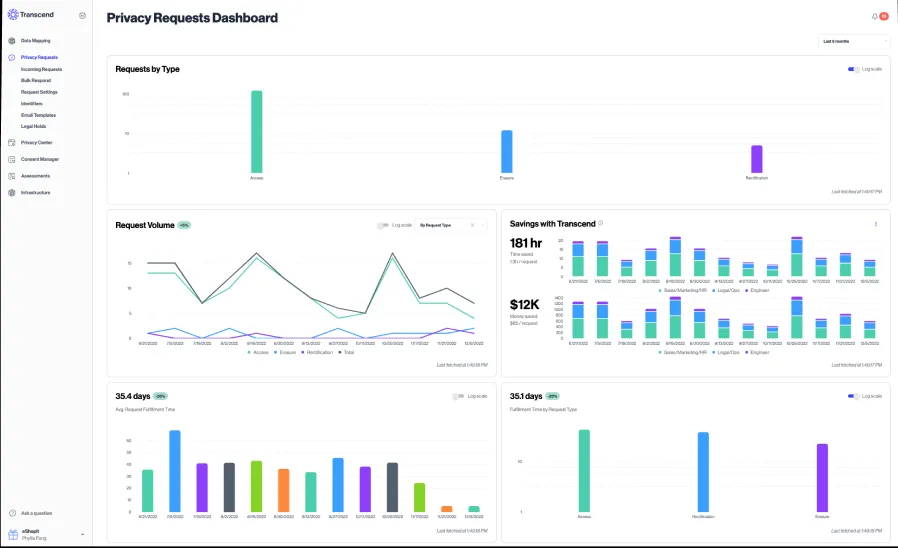
Best for: Engineering-led companies and automated DSARs.
Transcend is built for developers. It connects to your data infrastructure via APIs and automates the technical backend of privacy requests.
When a user asks to delete their data, Transcend can go into your databases and actually delete it. This “Compliance as Code” approach appeals to CTOs and technical founders.
When a user asks to delete their data, Transcend can go into your databases and actually delete it. This “Compliance as Code” approach appeals to CTOs and technical founders.
Pros:
- Full Automation: Reduces the manual work of fulfilling data requests to almost zero.
- Modern Stack: built for companies running on AWS, MongoDB, and modern SaaS tools.
- Data Mapping: Dynamically generates a live data map based on real-time API signals.
Cons:
- Technical Setup: Requires engineering resources to configure properly.
- Niche: Less focus on DLP or endpoint security compared to Kitecyber.
Verdict: If your product is built by engineers for engineers, Transcend will fit your workflow perfectly.
Conclusion
The days of “good enough” compliance are over. The regulators are active, and the fines are getting larger.
For most modern organizations, the challenge is no longer just databases: it is the endpoints, the SaaS apps, and the AI tools your employees use every day.
Kitecyber Data Shield stands out as the best all-around solution for this new reality. It combines visibility with active protection, ensuring that you do not just find your data, you keep it safe.
Review your current stack. If you rely on manual surveys or outdated network scanners, it is time to upgrade. Your data is moving. Your security should move with it.
FAQs on GDPR Data Discovery
GDPR data discovery software is a tool that automatically scans an organization’s systems, databases, cloud apps, endpoints, and file repositories to identify, classify, and map personal data (PII).
It helps companies understand where personal data exists, who can access it, how it flows, and whether it complies with GDPR requirements.
Because GDPR requires organizations to:
Know exactly where personal data resides,
- Limit access to that data,
- Fulfill data subject rights (DSARs),
- Detect and report breaches quickly,
- Maintain audit-ready records.
Data discovery provides the visibility and inventory needed to meet Articles 5, 30, 32, and 35 of GDPR.
Key capabilities include:
- Automated scanning across cloud + on-prem
- PII classification (names, emails, IDs, financial data, biometrics, etc.)
- Data mapping & lineage
- Risk scoring and policy alerts
- DSAR/Right-to-Erasure support
- Reporting for audits
- Integration with DLP, SIEM, IAM
Tools that combine discovery + classification + action (e.g., DLP enforcement) offer the most value.
GDPR doesn’t explicitly mandate tools, but in most organizations, manual discovery is impossible due to:
- Large data volumes
- Shadow IT
- SaaS sprawl
- Unstructured data
- Distributed cloud storage
Supervisory authorities expect demonstrable controls, and automated data discovery tools make that feasible.
A strong solution should scan:
- Databases (SQL/NoSQL)
- Cloud storage (AWS, Azure, GCP)
- SaaS apps (Google Workspace, Salesforce, HubSpot, Slack, etc.)
- Endpoints (Windows, macOS, Linux)
- File shares, NAS, email archives
- Collaboration apps (Teams, SharePoint, Notion, etc.)
Broader connector coverage = better compliance posture.
GDPR data discovery tools index and classify all locations where customer data exists, enabling teams to:
- Quickly find all data related to a subject
- Export it for data access requests
- Delete or redact it for Right-to-Erasure
- Verify completion
This reduces DSAR turnaround from days/weeks to minutes.
Kitecyber Data Shield provides real-time data discovery and classification across endpoints, cloud apps, and network traffic.
It identifies sensitive data exposure, risky file movements, shadow copies, and unauthorized transfers, essential for GDPR’s Article 32 security requirements.
Kitecyber also integrates discovery with DLP enforcement, blocking violations instantly.
Yes.
Kitecyber continuously scans endpoints (Windows, macOS, Linux) for:
- Personal data stored locally
Unauthorized file transfers
- Copying to USB, cloud drives, or email
- Sensitive file creation or exfiltration attempts
Its endpoint engine automatically applies policy-based controls, helping organizations prevent GDPR breaches before they occur.
Most traditional tools only find and classify data.
Modern platforms (like BigID, OneTrust, Kitecyber) can also take action, such as:
- Blocking high-risk data transfers
- Alerting on policy violations
- Quarantining sensitive files
- Automating compliance workflows
If prevention is important, look for tools that combine discovery + DLP + access control.
GDPR fines increase dramatically when regulators find that:
- An organization didn’t know where personal data was stored
- Data was overexposed
- Access controls were weak
- Breach detection was delayed
/ul>
Discovery software ensures organizations have:
A full inventory of PII
- Access restrictions
- Continuous monitoring
- Detectable audit trails
This demonstrates proactive compliance, reducing legal and financial risk.

With over a decade of experience steering cybersecurity initiatives, my core competencies lie in network architecture and security, essential in today's digital landscape. At Kitecyber, our mission resonates with my quest to tackle first-order cybersecurity challenges. My commitment to innovation and excellence, coupled with a strategic mindset, empowers our team to safeguard our industry's future against emerging threats.
Since co-founding Kitecyber, my focus has been on assembling a team of adept security researchers to address critical vulnerabilities and enhance our network and user security measures. Utilizing my expertise in the Internet Protocol Suite (TCP/IP) and Cybersecurity, we've championed the development of robust solutions to strengthen cyber defenses and operations.
Posts: 101
With over a decade of experience steering cybersecurity initiatives, my core competencies lie in network architecture and security, essential in today's digital landscape. At Kitecyber, our mission resonates with my quest to tackle first-order cybersecurity challenges. My commitment to innovation and excellence, coupled with a strategic mindset, empowers our team to safeguard our industry's future against emerging threats.
Since co-founding Kitecyber, my focus has been on assembling a team of adept security researchers to address critical vulnerabilities and enhance our network and user security measures. Utilizing my expertise in the Internet Protocol Suite (TCP/IP) and Cybersecurity, we've championed the development of robust solutions to strengthen cyber defenses and operations.
Posts: 101