Table Of Content

10+ Best Cyberhaven Alternatives & Competitors in 2026 (Ranked & Compared)
-
December 31, 2025
-
Summary: You might believe your current firewall and antivirus software keep your organization safe. Recent statistics suggest otherwise. Attackers now bypass traditional perimeters with ease, and insider threats account for a massive portion of data leaks. You need robust data security solutions that protect sensitive information where it lives, moves, and exits.
Cyberhaven gained popularity by introducing data lineage. It moved beyond simple pattern matching to track where data came from and where it was going. However, recent security incidents involving browser extensions and heavy endpoint agents have forced many IT leaders to reconsider their stack. You need Cyberhaven alternatives that offer the same visibility without the performance lag or the security risks inherent in legacy architectures.
The market has shifted toward more integrated solutions that handle Windows, macOS, and Linux with equal precision. If your team includes developers or engineers, you know that Linux support is often an afterthought in the security world. This gap creates a massive blind spot in your data discovery and classification efforts. Finding an alternative to Cyberhaven means finding a tool that treats every operating system as a first-class citizen.
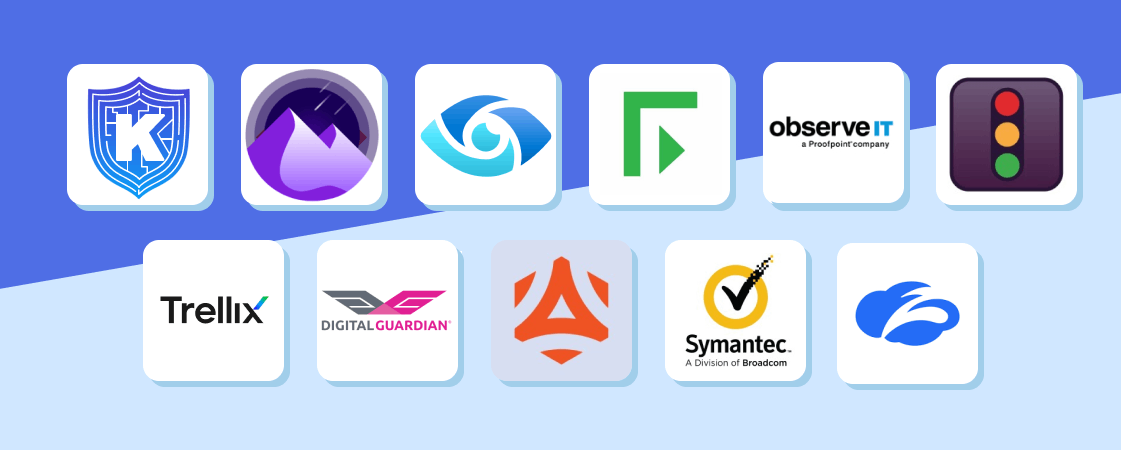
This article compares the top 10 alternatives to Cyberhaven DLP and ranks them in no particular order. Let’s get started!
The market has shifted toward more integrated solutions that handle Windows, macOS, and Linux with equal precision. If your team includes developers or engineers, you know that Linux support is often an afterthought in the security world. This gap creates a massive blind spot in your data discovery and classification efforts. Finding an alternative to Cyberhaven means finding a tool that treats every operating system as a first-class citizen.
This article compares the top 10 alternatives to Cyberhaven DLP and ranks them in no particular order. Let’s get started!
What is Cyberhaven?
Cyberhaven is a data security platform that differentiates itself through its data lineage approach, tracking sensitive information back to its origins across endpoints, SaaS applications, AI tools, and cloud environments. The agent-based platform specializes in monitoring data movement, uploads, downloads, and endpoint activity, providing visibility into how sensitive data travels throughout your organization.
Core Features of Cyberhaven
- Data lineage tracking to map how data moves across the environment.
- Insider threat monitoring based on abnormal access or sharing behavior.
- SaaS app visibility with pre-built connectors.
- Risk scoring of sensitive events to prioritize response.
- Automated enforcement with alerts, blocks, and policy actions.
Strengths of Cyberhaven DLP
- Strong in insider risk detection due to lineage tracking.
- Provides detailed context for security investigations.
- Cloud-first design with lightweight deployment.
- Growing adoption in industries with intellectual property (IP) protection needs.
Limitations and Challenges
- Licensing starts near USD 42 per user monthly, which can climb fast in large rollouts.
- Linux support remains limited.
- The admin console requires a steep learning curve.
- Few native Zero Trust integrations.
- No built-in UEBA for cloud apps.
- Gaps in endpoint control compared to comprehensive DLP suites.
Additionally, Cyberhaven experienced a security incident in December 2024 when their Chrome extension was compromised, raising concerns about the security of the very tool meant to protect sensitive data.
Why Consider Cyberhaven Alternatives?
Cyberhaven relies heavily on browser extensions and endpoint agents to map data flows. While this provides “data lineage,” it also introduces complexity that can slow down high-performance machines. Users often report slow performance during peak traffic times. When your developers are compiling code or your designers are rendering large files, a heavy security agent is the last thing they want.
There is also the matter of the 2024 Cyberhaven security incident. A phishing attack compromised a Cyberhaven employee’s credentials, leading to a malicious version of their Chrome extension. This event highlighted a critical risk: the tools you trust with your data could become a vector for supply chain attacks. You might want a solution that minimizes these risks through a more robust architecture.
Configuration complexity is another common pain point. Many teams find that setting up overlapping policies in Cyberhaven is tedious. If your policy logic is non-intuitive, you might accidentally exclude critical data from protection. The best Cyberhaven alternatives should simplify the following pain points so you can focus on security rather than troubleshooting your security tool:
There is also the matter of the 2024 Cyberhaven security incident. A phishing attack compromised a Cyberhaven employee’s credentials, leading to a malicious version of their Chrome extension. This event highlighted a critical risk: the tools you trust with your data could become a vector for supply chain attacks. You might want a solution that minimizes these risks through a more robust architecture.
Configuration complexity is another common pain point. Many teams find that setting up overlapping policies in Cyberhaven is tedious. If your policy logic is non-intuitive, you might accidentally exclude critical data from protection. The best Cyberhaven alternatives should simplify the following pain points so you can focus on security rather than troubleshooting your security tool:
- 1. Cost and Scalability Concerns: Many enterprises report Cyberhaven becoming cost-prohibitive as user counts grow. Licensing and data processing expenses increase quickly in global deployments.
- 2. Integration Challenges: Cyberhaven’s ecosystem of integrations is still maturing. Enterprises with large SaaS portfolios may struggle with coverage compared to vendors with broader API libraries.
- 3. Industry-Specific Compliance Needs: Highly regulated sectors—such as healthcare, finance, and defense—often require out-of-the-box HIPAA, PCI DSS, or FedRAMP compliance controls that Cyberhaven may lack.
- 4. Lack of Advanced Analytics and AI Capabilities: Cyberhaven competitors now offer stronger UEBA (User and Entity Behavior Analytics), AI-driven anomaly detection, and automated remediation pipelines. Cyberhaven is currently less mature in these areas.
- 5. Customer Support and User Experience Factors: On G2 and Reddit forums, customers highlight delays in support responsiveness and challenges in onboarding policies. Ease of use lags behind vendors like Microsoft Purview or Kitecyber.
Key Evaluation Criteria for Alternatives to Cyberhaven
The real innovation of Cyberhaven was its focus on lineage. Lineage tells you the story of a piece of data. It answers questions like:
- Where did this file originate?
- Who has modified it?
- What applications has it passed through?
- Is this data a copy of a more sensitive original?
When evaluating cyberhaven competitors, you must ensure it maintains this “lineage” capability. Without it, you are stuck with old-school DLP solution that causes endless false positives. For example, a “confidential” tag on a public press release will trigger a false alert every time it is shared. A lineage-aware tool like Kitecyber knows that while the press release might contain sensitive keywords, its origin is the “public relations” folder, so it does not need to be blocked.
Audit and Compliance: Meeting Global Standards
Whether you are dealing with SOC 2, HIPAA, GDPR, or the new DPDP in India, you need a tool that simplifies the audit process. Compliance is no longer just about having a policy; it is about proving that the policy is enforced.
Centralized Logging
Your chosen Cyberhaven replacement should provide a centralized dashboard where you can see every policy violation and data movement across the company. This audit trail is essential during a compliance review. You should be able to show an auditor exactly how you protected PII over the last six months with just a few clicks.
Pre-built Templates
Top-tier tools like Kitecyber and Forcepoint offer pre-built policy templates for major regulations. Instead of writing rules from scratch, you can simply toggle on “GDPR Protection” or “HIPAA Compliance.” This significantly reduces the time it takes to get your organization ready for an audit.
What the Industry Isn't Talking About: The Security-UX Balance
There is a growing trend on platforms like Hacker News and Reddit where employees are speaking out against “draconian” security measures. If your security tool is too intrusive, your best employees might find ways to bypass it. They might use personal devices or unauthorized “shadow” services just to get their work done.
The best alternative to Cyberhaven is one that is invisible to the user until they do something truly risky. It should feel like a “guardrail” rather than a “wall.” This is where lightweight, AI-driven tools have a massive advantage over legacy agents. By reducing false positives, you reduce the “security friction” that frustrates your team.
The best alternative to Cyberhaven is one that is invisible to the user until they do something truly risky. It should feel like a “guardrail” rather than a “wall.” This is where lightweight, AI-driven tools have a massive advantage over legacy agents. By reducing false positives, you reduce the “security friction” that frustrates your team.
Making the Switch: How to Transition from Cyberhaven
Moving from one DLP solution to another can feel daunting, but it does not have to be. You should follow a staged approach:
- Define Your Scope: Identify which platforms (Windows, Mac, Linux) and which apps (Slack, Drive, Jira) are most critical.
- Run a Pilot: Deploy your chosen Cyberhaven replacement to a small, diverse group of users. Include at least one developer who uses Linux.
- Evaluate Performance: Monitor the impact on machine performance and network latency. Ask your users for feedback.
- Test the Policies: Trigger a few "safe" policy violations to see how the system responds and how clear the alerts are for your security team.
- Full Rollout: Once you are confident in the tool's efficacy, deploy it to the rest of the organization.
Top Cyberhaven Alternatives in 2025
1. Kitecyber Data Shield: The Best All-Channel Cyberhaven Alternative
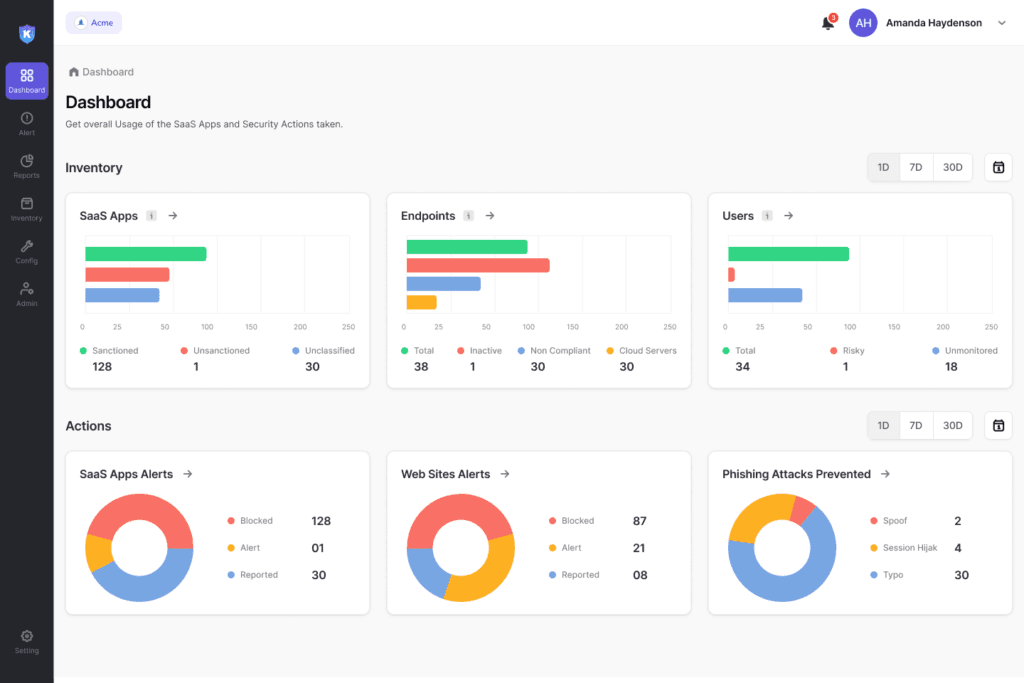
Kitecyber Data Shield stands out as a premier Cyberhaven replacement for organizations that require deep visibility across all platforms. Unlike many competitors that focus strictly on cloud apps or Windows, Kitecyber provides comprehensive support for Windows, macOS, and Linux. This is a critical requirement for engineering-heavy organizations where sensitive intellectual property often resides on Linux workstations.
Data Lineage and Intelligent Tracking
Kitecyber utilizes AI-driven data lineage to understand the context of your information. It does not just look for credit card numbers. It tracks how a piece of sensitive source code moves from a local repository to a Slack message and eventually to a personal cloud storage account. This context allows you to block risky behavior while letting legitimate work continue without interruption.
Cross-Platform Excellence
One major advantage of Kitecyber is its approach to different operating systems. Most DLP tools offer a “lite” version for Linux or macOS. Kitecyber ensures feature parity. You get the same level of data discovery and classification on a Linux server as you do on a Windows laptop. This consistency simplifies your audit and compliance reporting because you have a single source of truth for all your endpoints.
Performance and Security
Kitecyber is designed with a lightweight footprint. It avoids the agent bloat that typically plagues endpoint security software. By processing more at the edge, it reduces latency. This means your team can work at full speed while the Kitecyber Data Shield monitors for exfiltration in the background. It also avoids the risks associated with intrusive browser extensions by using more secure methods to monitor web traffic and SaaS interactions.
Why Consider Kitecyber Data Shield as a Top Cyberhaven Alternative?
Organizations choose Kitecyber Data Shield for several compelling reasons that address common pain points in data security:
- Rapid Deployment and Ease of Use: Its lightweight design and self-service model enable deployment in minutes, a significant advantage for teams seeking fast time-to-value.
- Cost Efficiency: By eliminating the need for expensive cloud gateways and hardware appliances, Kitecyber can offer substantial cost savings, with some users reporting up to a 50% reduction in total cost of ownership (TCO).
Ideal Use Cases for Kitecyber DLP:
- SMBs and mid-sized businesses seeking enterprise-grade security without high complexity.
- Organizations with hybrid or remote workforces needing protection for Windows, macOS, and Linux devices.
- Companies looking to consolidate vendors for IT management, security, and compliance.
2. Nightfall AI
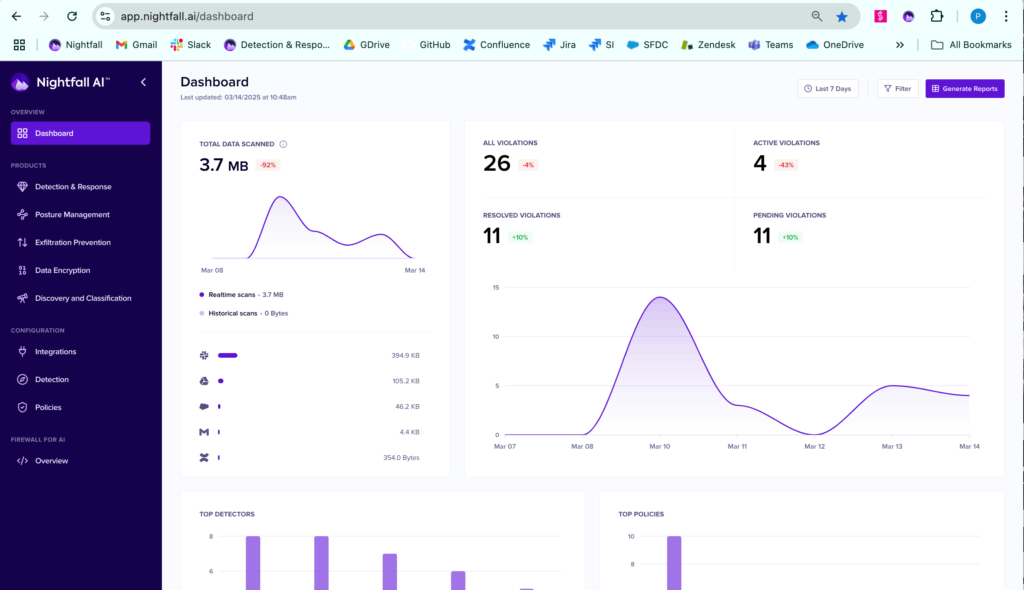
Overview: Nightfall AI stands out as an AI-native, all-in-one DLP platform providing comprehensive real-time coverage across SaaS apps, endpoints, and AI applications. Its frictionless deployment and automated remediation capabilities make it a top choice for organizations seeking an intuitive yet powerful DLP solution.
Key Features:
- Rapid, organization-wide rollout with minimal configuration requirements.
- Monitors all major exfiltration paths including SaaS, generative AI apps, and endpoint devices.
- Flexible policies enforceable for specific user subsets, groups, or domains.
- Robust remediation options with manual or automated actions, including real-time blocking.
- Seamless integrations with Okta, Entra ID, Google Directory, MDM solutions, and custom APIs.
Pricing Insights: Nightfall operates on a subscription model based on coverage scope and number of endpoints. As a cloud-native solution, it avoids upfront hardware costs.
3. Microsoft Purview
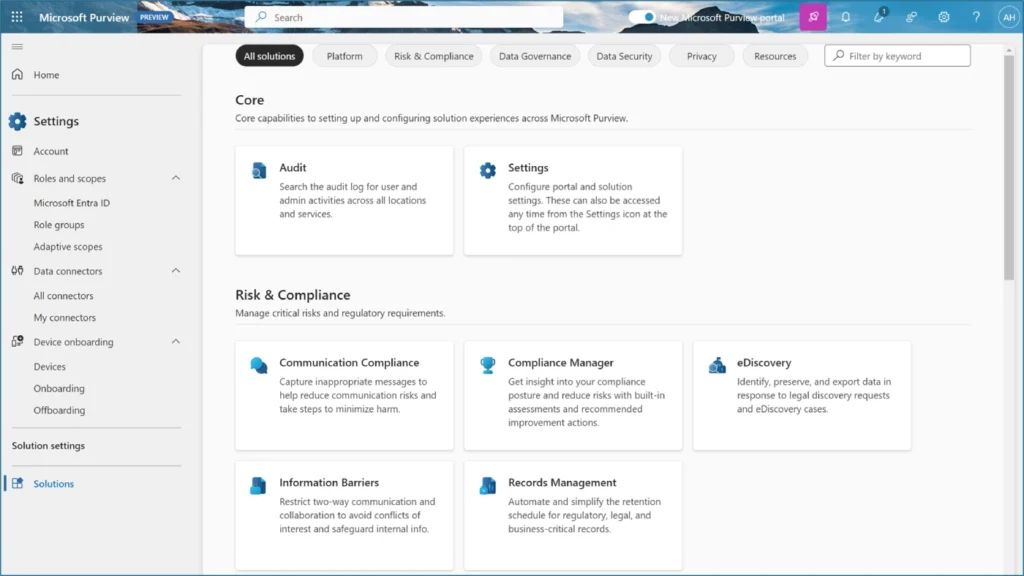
Overview: Microsoft Purview DLP offers a cloud-based data loss prevention solution deeply integrated with the Microsoft ecosystem. As part of the broader Microsoft Purview data governance platform, it provides exceptional visibility for organizations invested in Microsoft technologies.
Key Features:
- Strong AI classification and labeling engine optimized for Microsoft data sources.
- Decent workflow engine to enforce sharing policy controls across Microsoft 365 applications.
- Integration with Azure services provides extensive data governance capabilities.
- Policy templates help address common compliance requirements.
- Centralized management console for unified policy administration.
Pricing Insights: Microsoft Purview DLP is typically bundled within Microsoft E5 licensing, making it cost-effective for organizations already committed to the Microsoft ecosystem.
4. Forcepoint DLP
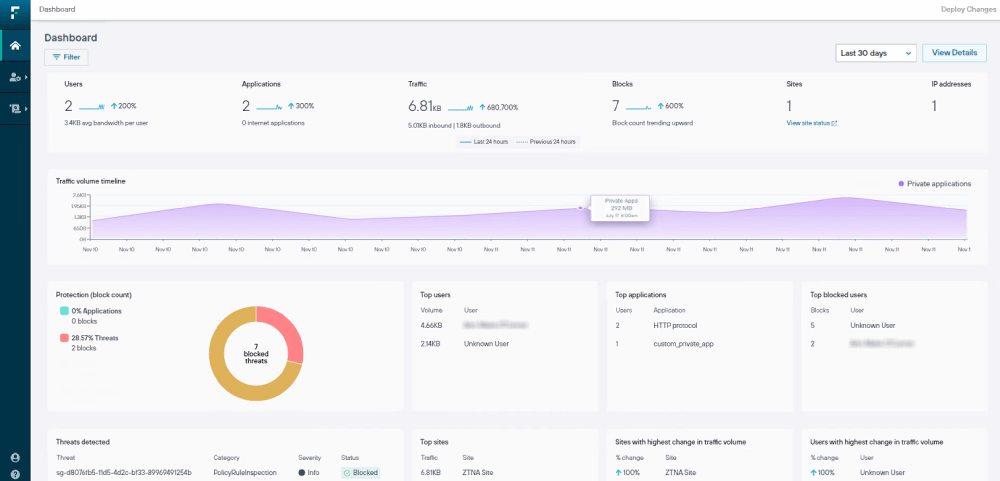
Overview: Forcepoint DLP, part of the Forcepoint One platform, offers broad coverage across endpoints, networks, cloud services, and web traffic. The solution emphasizes risk-adaptive protection that adjusts controls based on user behavior analytics.
Key Features:
- Advanced content inspection and customizable classifier engine for various industries.
- User risk scoring feature for monitoring and mitigating risky user behavior.
- Mobile DLP policy workflows controlling data transmission to mobile devices.
- OCR capabilities for detecting sensitive data within images.
- Pre-defined policy templates with customization options.
Pricing Insights: Forcepoint DLP starts at approximately $54.99 per user annually. Implementation and professional services may add to the cost.
5. Symantec DLP (Broadcom)
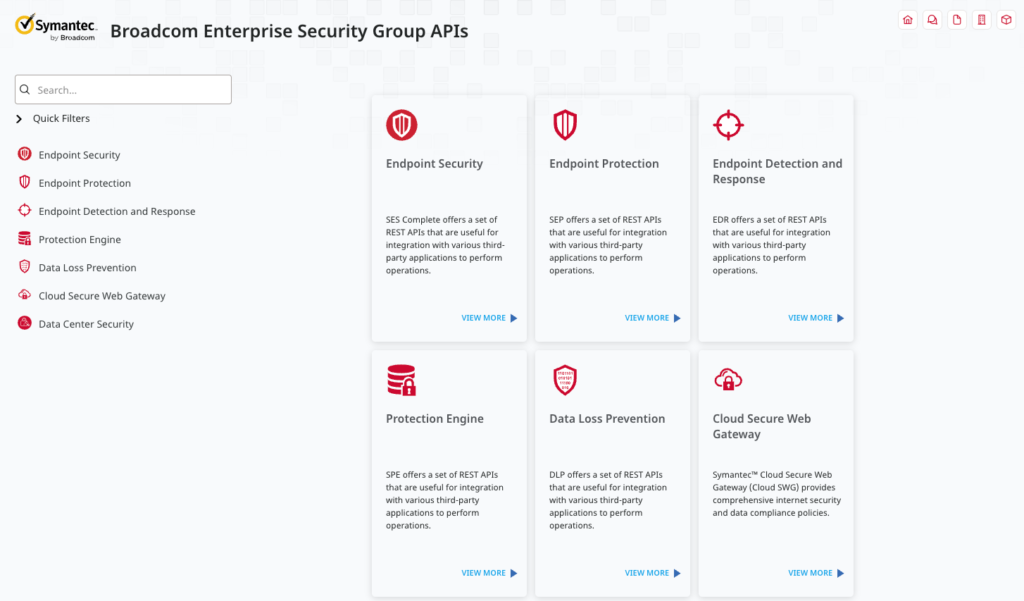
Overview: Now under Broadcom, Symantec DLP remains one of the most recognized enterprise DLP solutions with extensive coverage across endpoints, networks, storage, and cloud services.
Key Features:
- Wide coverage spanning multiple platforms and channels.
- Unified administration console simplifying policy management.
- Integration with other Broadcom security solutions for a cohesive ecosystem.
- Scalability designed for large, global enterprise deployments.
- Compliance templates for GDPR, HIPAA, and PCI DSS.
Pricing Insights: Symantec DLP typically carries higher licensing and operational expenses, positioning it as an enterprise-grade investment.
6. Zscaler DLP
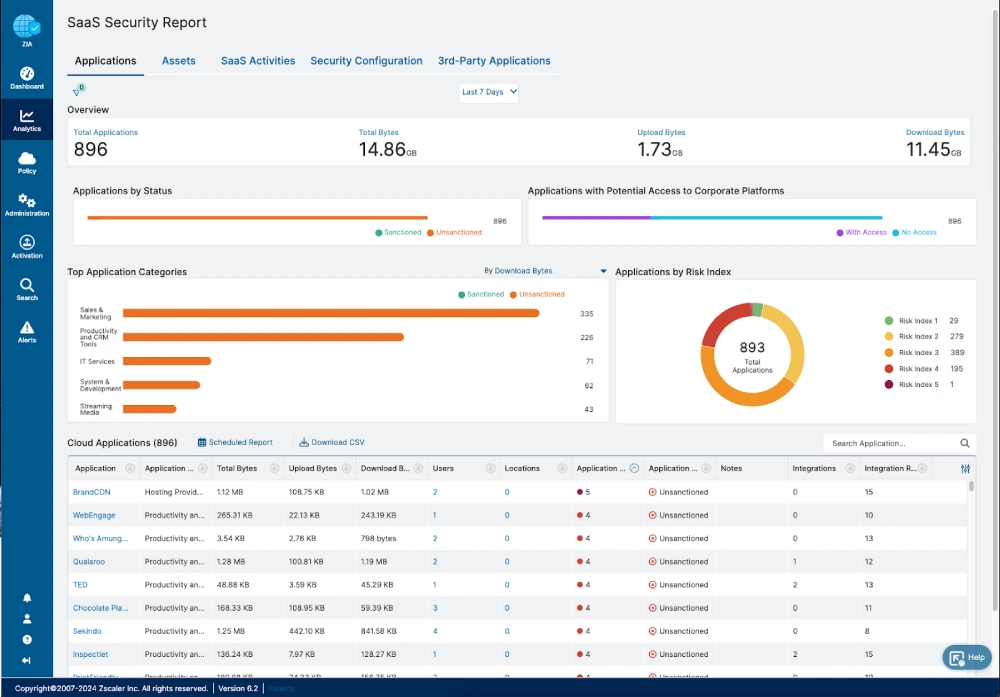
Overview: Zscaler DLP integrates data protection within the Zero Trust Exchange platform, providing security service edge (SSE) capabilities alongside traditional DLP functionality.
Key Features:
- Strong inline DLP inspecting traffic across cloud, SaaS, and endpoint environments.
- SSL/TLS decryption capabilities for comprehensive traffic visibility.
- Cloud-native architecture aligning with modern infrastructure trends.
- Integration with Zscaler Internet Access for unified policy enforcement.
Pricing Insights: Zscaler DLP starts at approximately $72 per user annually, typically as part of broader platform licensing.
7. Proofpoint ObserveIT
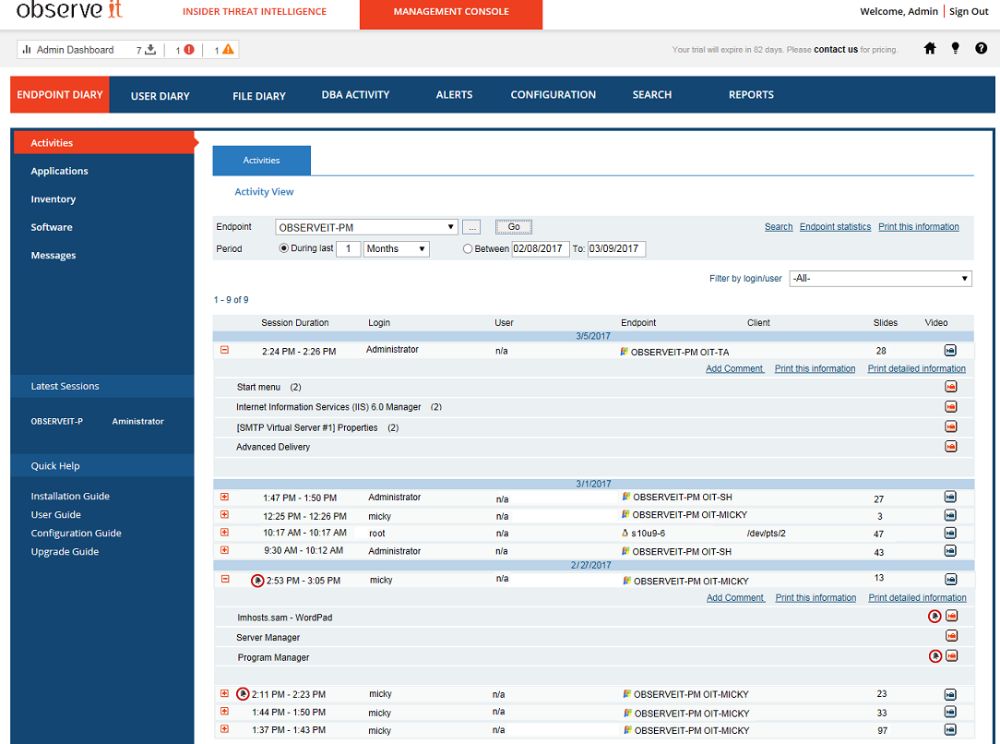
Overview: Proofpoint ObserveIT focuses primarily on user activity monitoring and insider threat detection, providing robust behavioral analytics and forensic capabilities.
Key Features:
- Real-time behavioral analytics for immediate risk identification.
- Detailed forensic data gathering for investigation context.
- Integration with other Proofpoint solutions and third-party tools.
- Session recording and user activity monitoring capabilities.
8. Trellix (McAfee Enterprise + FireEye)
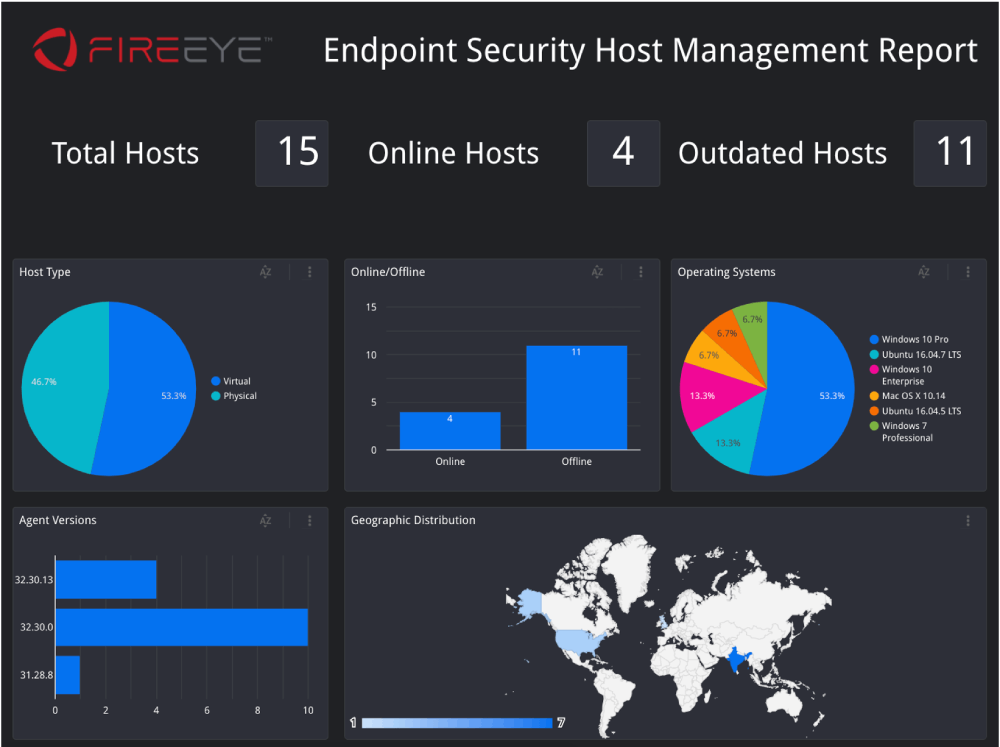
Overview: Trellix represents the merged capabilities of McAfee Enterprise and FireEye, offering a comprehensive DLP solution spanning endpoints, networks, cloud storage, and email.
Key Features:
- Common policies enforceable across all channels for unified protection.
- Real-time scanning capabilities with forensic analysis support.
- Data discovery across endpoints, networks, cloud storage, and email systems.
9. Digital Guardian
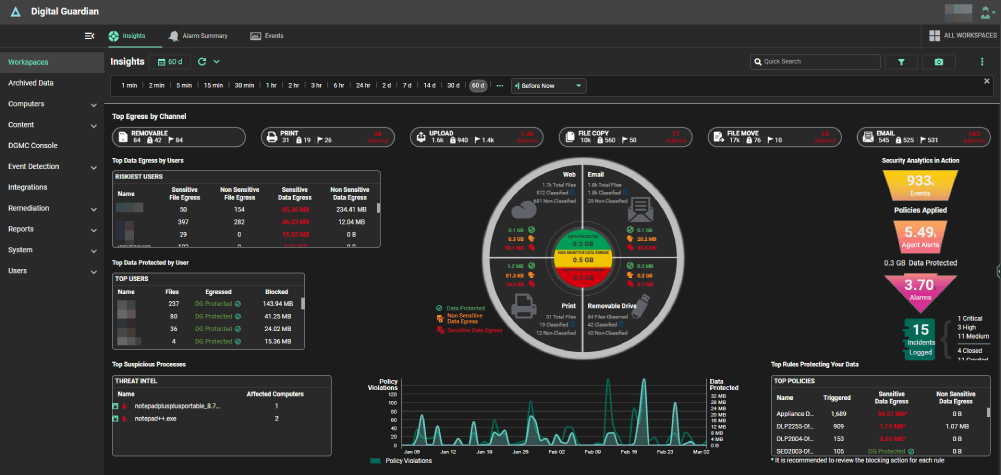
Overview: Now part of Fortra’s cybersecurity portfolio, Digital Guardian emphasizes data discovery, classification, and protection across endpoints and networks.
Key Features:
- Data discovery and classification supporting GDPR, CCPA, and other regulations.
- Flexible deployment options including cloud and on-premises implementations.
- Unique file tagging approach for persistent data protection.
10. Code42 Incydr
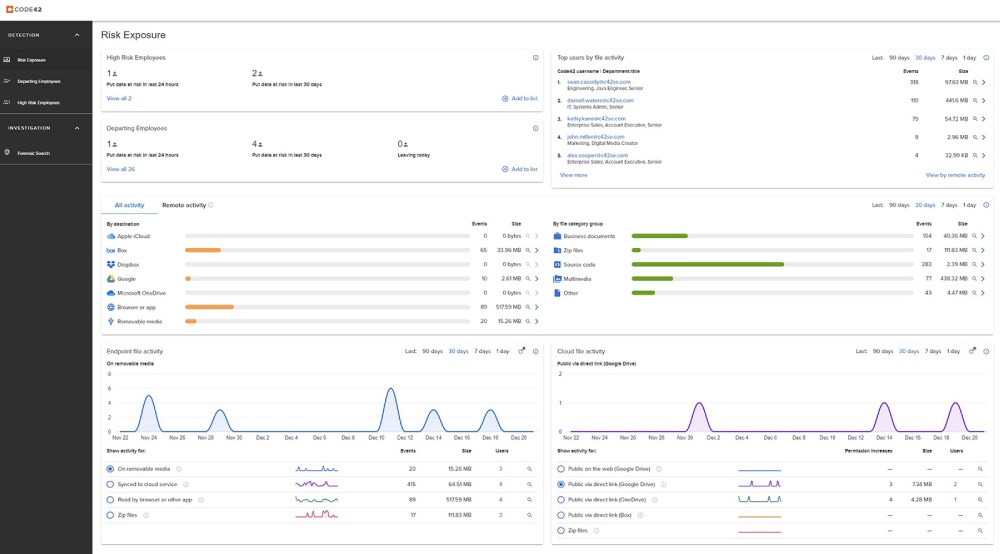
Overview: Code42 Incydr emphasizes data risk detection and response with a particular focus on insider threats and file exfiltration in remote work environments.
Key Features:
- Strong endpoint monitoring with real-time tracking of file movements.
- Insider threat focus targeting risky user behavior.
- Cloud integration for Google Workspace, M365, Box, Dropbox, and Salesforce.
11. Endpoint Protector by CoSoSys
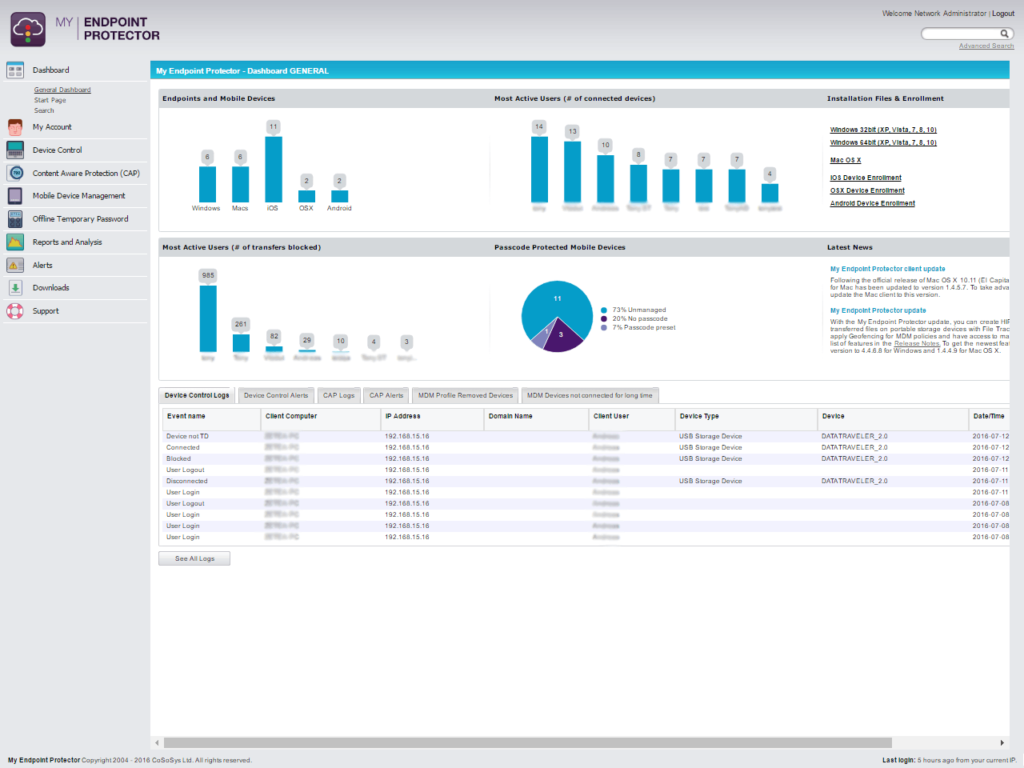
Overview: Endpoint Protector provides content-aware DLP protection with additional device control and mobile device management (MDM) capabilities.
Key Features:
- Content-aware protection examining data context and content.
- Device control capabilities for managing USB and peripheral data transfers.
- Integration with Active Directory for streamlined user management.
Comparative Matrix to Evaluate Cyberhaven Alternatives Head-to-Head
|
Feature/Capability |
Kitecyber Data Shield |
Nightfall AI |
Microsoft Purview |
Forcepoint DLP |
Symantec (Broadcom) |
Zscaler DLP |
Proofpoint ObserveIT |
Trellix DLP |
Digital Guardian |
Code42 Incydr |
Endpoint Protector |
|
G2 Ease of Use |
8.7/10 |
9.1/10 |
8.4/10 |
8.9/10 |
7.2/10 |
8.5/10 |
8.2/10 |
8.5/10 |
7.5/10 |
8.8/10 |
8.6/10 |
|
Insider Threats |
Comprehensive ★★★★★ (Behavioral/Offline) |
Good ★★★★☆ (SaaS/API focus) |
Good ★★★★☆ (Native M365) |
Good ★★★★☆ (Behavioral) |
Good ★★★★☆ (Mature rules) |
Good ★★★★☆ (Inline/Web) |
Comprehensive ★★★★★ (Behavioral) |
Good ★★★★☆ (Risk scoring) |
Comprehensive ★★★★★ (Forensics) |
Good ★★★★☆ (Exfiltration) |
Good ★★★★☆ (Device focus) |
|
Ransomware Protection |
Comprehensive ★★★★★ (C2/IP blocking) |
Good ★★★★☆ (API-level) |
Good ★★★★☆ (Cloud-native) |
Good ★★★★☆ (Sandboxing) |
Good ★★★★☆ (Intrusion) |
Good ★★★★☆ (Web isolation) |
Good ★★★★☆ (Intelligence) |
Good ★★★★☆ (Multi-layer) |
Good ★★★★☆ (Kernel-level) |
Medium ★★★☆☆ (File tracking) |
Good ★★★★☆ (USB-level) |
|
False Positives |
Low ★★★★★ (AI-driven) |
Low ★★★★★ (Context-aware) |
Medium ★★★☆☆ (Template-heavy) |
High ★★☆☆☆ (Signature-based) |
High ★★☆☆☆ (Legacy rules) |
High ★★☆☆☆ (Inline noise) |
Medium ★★★☆☆ (Heuristic) |
High ★★☆☆☆ (Frequent tuning) |
High ★★☆☆☆ (High noise) |
Low ★★★★★ (Movement focus) |
Medium ★★★☆☆ (Content-aware) |
|
User Experience |
Excellent ★★★★★ (< 2% CPU) |
Excellent ★★★★★ (Agentless) |
Good ★★★★☆ (Native) |
Poor ★★☆☆☆ (CPU spikes) |
Poor ★★☆☆☆ (Very heavy) |
Good ★★★★☆ (Latency risk) |
Good ★★★★☆ (Sensor-based) |
Good ★★★★☆ (Light post-tuning) |
Poor ★★☆☆☆ (Kernel impact) |
Excellent ★★★★★ (Transparent) |
Good ★★★★☆ (Minimal impact) |
|
Deployment |
Endpoint ★★★★★ (Pure Cloud) |
SaaS API ★★★★★ (No Agent) |
Native ★★★★☆ (Hybrid) |
Appliance ★★☆☆☆ (Complex) |
Appliance ★★☆☆☆ (Legacy) |
SASE ★★★★☆ (Cloud Proxy) |
Hybrid ★★★☆☆ (Sensors) |
Appliance ★★☆☆☆ (Central) |
Managed ★★★★☆ (Cloud/SaaS) |
Endpoint ★★★★★ (Cloud Agent) |
Hybrid ★★★★☆ (Flexible) |
|
Total Cost (TCO) |
Low ★★★★★ (~50% Savings) |
Low ★★★★★ (No hardware) |
Low ★★★★☆ (If E5) |
High ★☆☆☆☆ ($55+/user) |
High ★☆☆☆☆ (Legacy pricing) |
High ★☆☆☆☆ (Bundle-only) |
Medium ★★★☆☆ ($40-90) |
High ★☆☆☆☆ ($60+) |
High ★☆☆☆☆ ($300k+ start) |
Medium ★★★☆☆ ($40-80) |
Low ★★★★★ (Value-focused) |
|
Linux Support |
Full Parity ★★★★★ |
None ☆☆☆☆☆ |
Limited ★★☆☆☆ |
Limited ★★☆☆☆ |
Good ★★★★☆ |
None ☆☆☆☆☆ |
Limited ★★☆☆☆ |
Limited ★★☆☆☆ |
Good ★★★★☆ |
None ☆☆☆☆☆ |
Good ★★★★☆ |
|
Lineage/Discovery |
Comprehensive ★★★★★ (Audit trails) |
Good ★★★★☆ (SaaS discovery) |
Good ★★★★☆ (M365 data) |
Comprehensive ★★★★★ (Lifecycle) |
Comprehensive ★★★★★ (Enterprise) |
Good ★★★★☆ (Inline only) |
Comprehensive ★★★★★ (User story) |
Limited ★★☆☆☆ (Logs only) |
Comprehensive ★★★★★ (Discovery) |
Limited ★★☆☆☆ (No Content) |
Good ★★★★☆ (Scan-based) |
|
Location Security |
Comprehensive ★★★★★ (Geofencing) |
Poor ★★☆☆☆ (Cloud only) |
Medium ★★★☆☆ (Policy-based) |
Poor ★★☆☆☆ (Minimal) |
Medium ★★★☆☆ (Peripheral) |
Good ★★★★☆ (Geo-IP) |
Poor ★★☆☆☆ (User-focus) |
Good ★★★★☆ (Device rules) |
Good ★★★★☆ (Peripheral) |
Poor ★★☆☆☆ (Minimal) |
Good ★★★★☆ (Device ID) |
Conclusion
Selecting the right Cyberhaven alternative requires careful evaluation of your organization’s specific data protection needs, existing infrastructure, and resource constraints. Leading options include Nightfall AI for SaaS protection, Microsoft Purview for Microsoft-centric environments, Forcepoint DLP for broad coverage, and Kitecyber for cross-platform (Windows, macOS, Linux) performance.
The optimal choice balances comprehensive data protection with practical operational considerations. By following the structured evaluation approach outlined in this guide, security leaders can make informed decisions that align with their organization’s unique requirements.
The optimal choice balances comprehensive data protection with practical operational considerations. By following the structured evaluation approach outlined in this guide, security leaders can make informed decisions that align with their organization’s unique requirements.
Frequently Asked Questions
For large enterprises, Symantec DLP offers mature capabilities and regulatory support, while Forcepoint DLP provides risk-adaptive protection. Kitecyber is often the best cyberhaven alternative for engineering-heavy enterprises needing mac, windows, and linux support.
Pricing models vary from per-user subscriptions (Nightfall AI, Kitecyber) to complex enterprise licensing (Symantec). Cloud-native solutions typically involve lower upfront costs compared to on-premises legacy suites.
Code42 Incydr specializes in insider risk management through file activity monitoring, while Proofpoint ObserveIT provides detailed behavioral analytics.
Most enterprise DLP solutions offer API integrations and pre-built connectors. Microsoft Purview integrates natively with M365, while Kitecyber offers a unified platform for security and IT management.
Healthcare organizations benefit from HIPAA-compliant solutions like Symantec, financial institutions require PCI DSS capabilities found in Forcepoint, and tech companies often prefer the IP protection strengths of Kitecyber.
True enterprise-grade open-source DLP is limited. However, solutions like Kitecyber offer more budget-friendly commercial alternatives starting at approximately $12 per user monthly, providing core DLP capabilities at a much lower cost than Cyberhaven.

With over a decade of experience steering cybersecurity initiatives, my core competencies lie in network architecture and security, essential in today's digital landscape. At Kitecyber, our mission resonates with my quest to tackle first-order cybersecurity challenges. My commitment to innovation and excellence, coupled with a strategic mindset, empowers our team to safeguard our industry's future against emerging threats.
Since co-founding Kitecyber, my focus has been on assembling a team of adept security researchers to address critical vulnerabilities and enhance our network and user security measures. Utilizing my expertise in the Internet Protocol Suite (TCP/IP) and Cybersecurity, we've championed the development of robust solutions to strengthen cyber defenses and operations.
Posts: 52
With over a decade of experience steering cybersecurity initiatives, my core competencies lie in network architecture and security, essential in today's digital landscape. At Kitecyber, our mission resonates with my quest to tackle first-order cybersecurity challenges. My commitment to innovation and excellence, coupled with a strategic mindset, empowers our team to safeguard our industry's future against emerging threats.
Since co-founding Kitecyber, my focus has been on assembling a team of adept security researchers to address critical vulnerabilities and enhance our network and user security measures. Utilizing my expertise in the Internet Protocol Suite (TCP/IP) and Cybersecurity, we've championed the development of robust solutions to strengthen cyber defenses and operations.
Posts: 52